
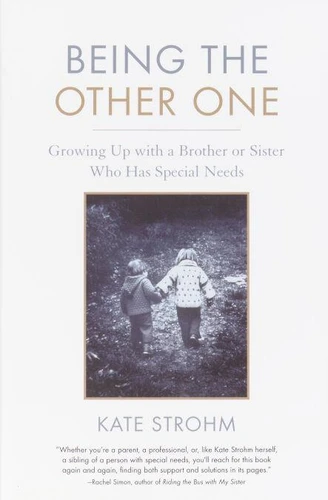
Being the Other One. Growing Up with a Brother or Sister Who Has Special Needs
Par :Formats :
Disponible dans votre compte client Decitre ou Furet du Nord dès validation de votre commande. Le format ePub protégé est :
- Compatible avec une lecture sur My Vivlio (smartphone, tablette, ordinateur)
- Compatible avec une lecture sur liseuses Vivlio
- Pour les liseuses autres que Vivlio, vous devez utiliser le logiciel Adobe Digital Edition. Non compatible avec la lecture sur les liseuses Kindle, Remarkable et Sony
- Non compatible avec un achat hors France métropolitaine
 , qui est-ce ?
Notre partenaire de plateforme de lecture numérique où vous retrouverez l'ensemble de vos ebooks gratuitement
Pour en savoir plus sur nos ebooks, consultez notre aide en ligne ici
C'est si simple ! Lisez votre ebook avec l'app Vivlio sur votre tablette, mobile ou ordinateur :

- Nombre de pages224
- FormatePub
- ISBN978-0-8348-2339-6
- EAN9780834823396
- Date de parution27/03/2018
- Protection num.Adobe DRM
- Taille423 Ko
- Infos supplémentairesepub
- ÉditeurShambhala
Résumé
When there's a disabled child in the family, how are normally developing siblings affected? According to Kate Strohm, a counselor and health educator, siblings of the disabled face particular emotional challenges that are often overlooked. Able siblings commonly struggle with feelings of isolation, grief, anger, and anxiety-and these and other emotional issues can have lifelong effects. Being the Other One is based on the author's own experience (as a sibling of a sister with cerebral palsy) and on extensive interviews she conducted with siblings of all ages.
In clear and compassionate terms, Strohm explores the often secret feelings of siblings and offers valuable strategies for coping with the challenges they face. Being the Other One reveals the difficulties faced by siblings at all stages of life, from early childhood through adulthood, when siblings must often assume responsibility for the care of their disabled brothers and sisters. Though the book looks honestly at the many challenges that siblings face, it is full of encouragement and practical strategies.
Strohm emphasizes that when siblings are able to clearly identify and openly express their feelings and concerns-and when parents and health professionals offer the needed support-siblings can thrive. This book includes writing exercises for personal exploration and a substantial resources section listing helpful books, organizations, and websites.
In clear and compassionate terms, Strohm explores the often secret feelings of siblings and offers valuable strategies for coping with the challenges they face. Being the Other One reveals the difficulties faced by siblings at all stages of life, from early childhood through adulthood, when siblings must often assume responsibility for the care of their disabled brothers and sisters. Though the book looks honestly at the many challenges that siblings face, it is full of encouragement and practical strategies.
Strohm emphasizes that when siblings are able to clearly identify and openly express their feelings and concerns-and when parents and health professionals offer the needed support-siblings can thrive. This book includes writing exercises for personal exploration and a substantial resources section listing helpful books, organizations, and websites.