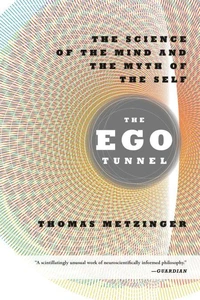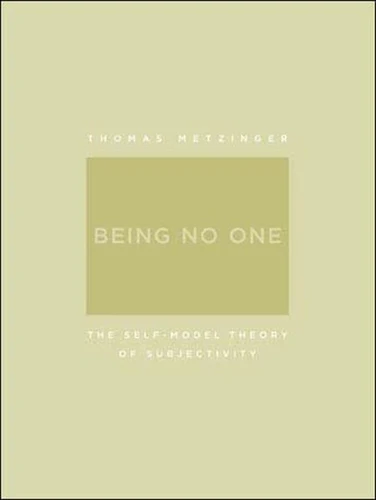
Being No One. The Self-Model Theory of Subjectivity
Par :Formats :
Disponible dans votre compte client Decitre ou Furet du Nord dès validation de votre commande. Le format ePub protégé est :
- Compatible avec une lecture sur My Vivlio (smartphone, tablette, ordinateur)
- Compatible avec une lecture sur liseuses Vivlio
- Pour les liseuses autres que Vivlio, vous devez utiliser le logiciel Adobe Digital Edition. Non compatible avec la lecture sur les liseuses Kindle, Remarkable et Sony
- Non compatible avec un achat hors France métropolitaine
 , qui est-ce ?
Notre partenaire de plateforme de lecture numérique où vous retrouverez l'ensemble de vos ebooks gratuitement
Pour en savoir plus sur nos ebooks, consultez notre aide en ligne ici
C'est si simple ! Lisez votre ebook avec l'app Vivlio sur votre tablette, mobile ou ordinateur :

- Nombre de pages714
- FormatePub
- ISBN0-262-26380-7
- EAN9780262263801
- Date de parution20/08/2004
- Protection num.Adobe DRM
- Taille3 Mo
- Infos supplémentairesepub
- ÉditeurBradford Books
Résumé
According to Thomas Metzinger, no such things as selves exist in the world: nobody ever had or was a self. All that exists are phenomenal selves, as they appear in conscious experience. The phenomenal self, however, is not a thing but an ongoing process; it is the content of a "transparent self-model." In Being No One, Metzinger, a German philosopher, draws strongly on neuroscientific research to present a representationalist and functional analysis of what a consciously experienced first-person perspective actually is.
Building a bridge between the humanities and the empirical sciences of the mind, he develops new conceptual toolkits and metaphors; uses case studies of unusual states of mind such as agnosia, neglect, blindsight, and hallucinations; and offers new sets of multilevel constraints for the concept of consciousness. Metzinger's central question is: How exactly does strong, consciously experienced subjectivity emerge out of objective events in the natural world? His epistemic goal is to determine whether conscious experience, in particular the experience of being someone that results from the emergence of a phenomenal self, can be analyzed on subpersonal levels of description.
He also asks if and how our Cartesian intuitions that subjective experiences as such can never be reductively explained are themselves ultimately rooted in the deeper representational structure of our conscious minds.
Building a bridge between the humanities and the empirical sciences of the mind, he develops new conceptual toolkits and metaphors; uses case studies of unusual states of mind such as agnosia, neglect, blindsight, and hallucinations; and offers new sets of multilevel constraints for the concept of consciousness. Metzinger's central question is: How exactly does strong, consciously experienced subjectivity emerge out of objective events in the natural world? His epistemic goal is to determine whether conscious experience, in particular the experience of being someone that results from the emergence of a phenomenal self, can be analyzed on subpersonal levels of description.
He also asks if and how our Cartesian intuitions that subjective experiences as such can never be reductively explained are themselves ultimately rooted in the deeper representational structure of our conscious minds.