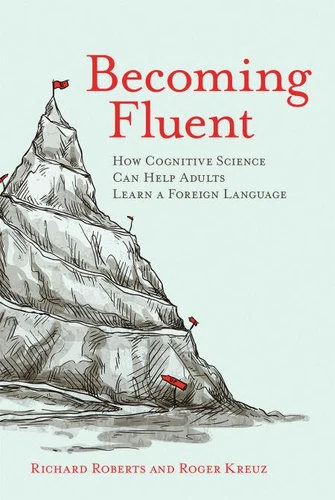
Becoming Fluent. How Cognitive Science Can Help Adults Learn a Foreign Language
Par : ,Formats :
Disponible dans votre compte client Decitre ou Furet du Nord dès validation de votre commande. Le format ePub protégé est :
- Compatible avec une lecture sur My Vivlio (smartphone, tablette, ordinateur)
- Compatible avec une lecture sur liseuses Vivlio
- Pour les liseuses autres que Vivlio, vous devez utiliser le logiciel Adobe Digital Edition. Non compatible avec la lecture sur les liseuses Kindle, Remarkable et Sony
- Non compatible avec un achat hors France métropolitaine
 , qui est-ce ?
Notre partenaire de plateforme de lecture numérique où vous retrouverez l'ensemble de vos ebooks gratuitement
Pour en savoir plus sur nos ebooks, consultez notre aide en ligne ici
C'est si simple ! Lisez votre ebook avec l'app Vivlio sur votre tablette, mobile ou ordinateur :

- Nombre de pages248
- FormatePub
- ISBN978-0-262-33047-3
- EAN9780262330473
- Date de parution14/08/2015
- Protection num.Adobe DRM
- Taille709 Ko
- Infos supplémentairesepub
- ÉditeurThe MIT Press
Résumé
Forget everything you've heard about adult language learning: Evidence from cognitive science and psychology proves we can learn foreign languages just as easily as children. This eye-opening study reveals how adult learners can master a foreign language by drawing on skills and knowledge honed over a lifetime. Adults who want to learn a foreign language are often discouraged because they believe they cannot acquire a language as easily as children.
Once they begin to learn a language, adults may be further discouraged when they find the methods used to teach children don't seem to work for them. What is an adult language learner to do? In this book, Richard Roberts and Roger Kreuz draw on insights from psychology and cognitive science to show that adults can master a foreign language if they bring to bear the skills and knowledge they have honed over a lifetime.
Adults shouldn't try to learn as children do; they should learn like adults. Roberts and Kreuz report evidence that adults can learn new languages even more easily than children. Children appear to have only two advantages over adults in learning a language: they acquire a native accent more easily, and they do not suffer from self-defeating anxiety about learning a language. Adults, on the other hand, have the greater advantages-gained from experience-of an understanding of their own mental processes and knowing how to use language to do things.
Adults have an especially advantageous grasp of pragmatics, the social use of language, and Roberts and Kreuz show how to leverage this metalinguistic ability in learning a new language. Learning a language takes effort. But if adult learners apply the tools acquired over a lifetime, it can be enjoyable and rewarding.
Once they begin to learn a language, adults may be further discouraged when they find the methods used to teach children don't seem to work for them. What is an adult language learner to do? In this book, Richard Roberts and Roger Kreuz draw on insights from psychology and cognitive science to show that adults can master a foreign language if they bring to bear the skills and knowledge they have honed over a lifetime.
Adults shouldn't try to learn as children do; they should learn like adults. Roberts and Kreuz report evidence that adults can learn new languages even more easily than children. Children appear to have only two advantages over adults in learning a language: they acquire a native accent more easily, and they do not suffer from self-defeating anxiety about learning a language. Adults, on the other hand, have the greater advantages-gained from experience-of an understanding of their own mental processes and knowing how to use language to do things.
Adults have an especially advantageous grasp of pragmatics, the social use of language, and Roberts and Kreuz show how to leverage this metalinguistic ability in learning a new language. Learning a language takes effort. But if adult learners apply the tools acquired over a lifetime, it can be enjoyable and rewarding.