SOLDES
Jusqu'à -70% sur une sélection d'articles*

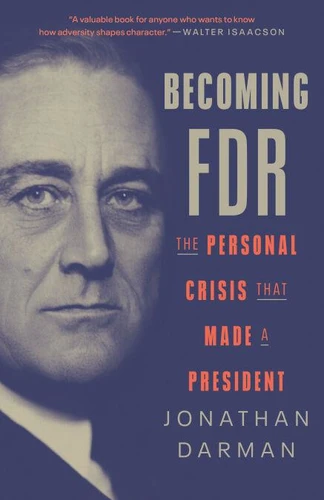
Becoming FDR. The Personal Crisis That Made a President
Par :Formats :
Disponible dans votre compte client Decitre ou Furet du Nord dès validation de votre commande. Le format ePub protégé est :
- Compatible avec une lecture sur My Vivlio (smartphone, tablette, ordinateur)
- Compatible avec une lecture sur liseuses Vivlio
- Pour les liseuses autres que Vivlio, vous devez utiliser le logiciel Adobe Digital Edition. Non compatible avec la lecture sur les liseuses Kindle, Remarkable et Sony
- Non compatible avec un achat hors France métropolitaine
 , qui est-ce ?
Notre partenaire de plateforme de lecture numérique où vous retrouverez l'ensemble de vos ebooks gratuitement
Pour en savoir plus sur nos ebooks, consultez notre aide en ligne ici
C'est si simple ! Lisez votre ebook avec l'app Vivlio sur votre tablette, mobile ou ordinateur :

- Nombre de pages448
- FormatePub
- ISBN978-0-593-44850-2
- EAN9780593448502
- Date de parution06/09/2022
- Protection num.Adobe DRM
- Taille38 Mo
- Infos supplémentairesepub
- ÉditeurRandom House
Résumé
"An illuminating account of how Franklin D. Roosevelt's struggles with polio steeled him for the great struggles of the Depression and of World War II."-Jon Meacham"A valuable book for anyone who wants to know how adversity shapes character. By understanding how FDR became a deeper and more empathetic person, we can nurture those traits in ourselves and learn from the challenges we all face."-Walter Isaacson, bestselling author of Steve Jobs and Leonardo Da VinciIn popular memory, Franklin Delano Roosevelt was the quintessential political "natural." Born in 1882 to a wealthy, influential family and blessed with an abundance of charm and charisma, he seemed destined for high office.
Yet for all his gifts, the young Roosevelt nonetheless lacked depth, empathy, and an ability to think strategically. Those qualities, so essential to his success as president, were skills he acquired during his seven-year journey through illness and recovery. Becoming FDR traces the riveting story of the struggle that forged Roosevelt's character and political ascent. Soon after contracting polio in 1921 at the age of thirty-nine, the former failed vice-presidential candidate was left paralyzed from the waist down.
He spent much of the next decade trying to rehabilitate his body and adapt to the stark new reality of his life. By the time he reemerged on the national stage in 1928 as the Democratic candidate for governor of New York, his character and his abilities had been transformed. He had become compassionate and shrewd by necessity, tailoring his speeches to inspire listeners and to reach them through a new medium-radio.
Suffering cemented his bond with those he once famously called "the forgotten man." Most crucially, he had discovered how to find hope in a seemingly hopeless situation-a skill that he employed to motivate Americans through the Great Depression and World War II. The polio years were transformative, too, for the marriage of Franklin and Eleanor, and for Eleanor herself, who became, at first reluctantly, her husband's surrogate at public events, and who grew to become a political and humanitarian force in her own right. Tracing the physical, political, and personal evolution of the iconic president, Becoming FDR shows how adversity can lead to greatness, and to the power to remake the world.
Yet for all his gifts, the young Roosevelt nonetheless lacked depth, empathy, and an ability to think strategically. Those qualities, so essential to his success as president, were skills he acquired during his seven-year journey through illness and recovery. Becoming FDR traces the riveting story of the struggle that forged Roosevelt's character and political ascent. Soon after contracting polio in 1921 at the age of thirty-nine, the former failed vice-presidential candidate was left paralyzed from the waist down.
He spent much of the next decade trying to rehabilitate his body and adapt to the stark new reality of his life. By the time he reemerged on the national stage in 1928 as the Democratic candidate for governor of New York, his character and his abilities had been transformed. He had become compassionate and shrewd by necessity, tailoring his speeches to inspire listeners and to reach them through a new medium-radio.
Suffering cemented his bond with those he once famously called "the forgotten man." Most crucially, he had discovered how to find hope in a seemingly hopeless situation-a skill that he employed to motivate Americans through the Great Depression and World War II. The polio years were transformative, too, for the marriage of Franklin and Eleanor, and for Eleanor herself, who became, at first reluctantly, her husband's surrogate at public events, and who grew to become a political and humanitarian force in her own right. Tracing the physical, political, and personal evolution of the iconic president, Becoming FDR shows how adversity can lead to greatness, and to the power to remake the world.