
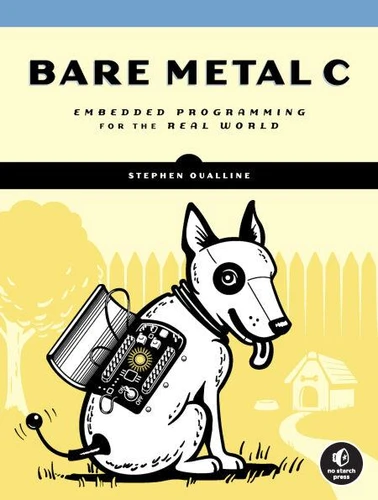
Bare Metal C. Embedded Programming for the Real World
Par :Formats :
Disponible dans votre compte client Decitre ou Furet du Nord dès validation de votre commande. Le format ePub est :
- Compatible avec une lecture sur My Vivlio (smartphone, tablette, ordinateur)
- Compatible avec une lecture sur liseuses Vivlio
- Pour les liseuses autres que Vivlio, vous devez utiliser le logiciel Adobe Digital Edition. Non compatible avec la lecture sur les liseuses Kindle, Remarkable et Sony
 , qui est-ce ?
Notre partenaire de plateforme de lecture numérique où vous retrouverez l'ensemble de vos ebooks gratuitement
Pour en savoir plus sur nos ebooks, consultez notre aide en ligne ici
C'est si simple ! Lisez votre ebook avec l'app Vivlio sur votre tablette, mobile ou ordinateur :

- Nombre de pages304
- FormatePub
- ISBN978-1-7185-0163-8
- EAN9781718501638
- Date de parution19/07/2022
- Protection num.pas de protection
- Taille4 Mo
- Infos supplémentairesepub
- ÉditeurNo Starch Press
Résumé
Bare Metal C teaches you to program embedded systems with the C programming language. You'll learn how embedded programs interact with bare hardware directly, go behind the scenes with the compiler and linker, and learn C features that are important for programming regular computers. Bare Metal C will teach you how to program embedded devices with the C programming language. For embedded system programmers who want precise and complete control over the system they are using, this book pulls back the curtain on what the compiler is doing for you so that you can see all the details of what's happening with your program. The first part of the book teaches C basics with the aid of a low-cost, widely available bare metal system (the Nucleo Arm evaluation system), which gives you all the tools needed to perform basic embedded programming.
As you progress through the book you'll learn how to integrate serial input/output (I/O) and interrupts into your programs. You'll also learn what the C compiler and linker do behind the scenes, so that you'll be better able to write more efficient programs that maximize limited memory. Finally, you'll learn how to use more complex, memory hungry C features like dynamic memory, file I/O, and floating-point numbers. Topic coverage includes: The basic program creation process Simple GPIO programming (blink an LED) Writing serial device drivers The C linker and preprocessor Decision and control statements Numbers, arrays, pointers, strings, and complex data types Local variables and procedures Dynamic memory File and raw I/O Floating-point numbers Modular programming
As you progress through the book you'll learn how to integrate serial input/output (I/O) and interrupts into your programs. You'll also learn what the C compiler and linker do behind the scenes, so that you'll be better able to write more efficient programs that maximize limited memory. Finally, you'll learn how to use more complex, memory hungry C features like dynamic memory, file I/O, and floating-point numbers. Topic coverage includes: The basic program creation process Simple GPIO programming (blink an LED) Writing serial device drivers The C linker and preprocessor Decision and control statements Numbers, arrays, pointers, strings, and complex data types Local variables and procedures Dynamic memory File and raw I/O Floating-point numbers Modular programming