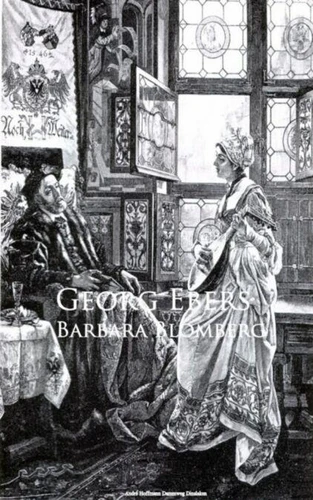
Barbara Blomberg
Par :Formats :
Disponible dans votre compte client Decitre ou Furet du Nord dès validation de votre commande. Le format ePub est :
- Compatible avec une lecture sur My Vivlio (smartphone, tablette, ordinateur)
- Compatible avec une lecture sur liseuses Vivlio
- Pour les liseuses autres que Vivlio, vous devez utiliser le logiciel Adobe Digital Edition. Non compatible avec la lecture sur les liseuses Kindle, Remarkable et Sony
 , qui est-ce ?
Notre partenaire de plateforme de lecture numérique où vous retrouverez l'ensemble de vos ebooks gratuitement
Pour en savoir plus sur nos ebooks, consultez notre aide en ligne ici
C'est si simple ! Lisez votre ebook avec l'app Vivlio sur votre tablette, mobile ou ordinateur :

- Nombre de pages1150
- FormatePub
- ISBN978-3-7364-1352-8
- EAN9783736413528
- Date de parution09/09/2016
- Protection num.Digital Watermarking
- Taille728 Ko
- Infos supplémentairesepub
- ÉditeurAndhof
Résumé
Barbara Blomberg was the mother of Don John of Austria. Blomberg was born in Ratisbon (modern Germany), the eldest daughter of Wolfgang Plumberger or Blomberg, a burgher, and of his wife Sibilla Lohman. A singer, in 1546 she was for a short time the mistress of the Holy Roman Emperor Charles V, who was in Regensburg for the meeting of the Imperial Diet. On 24 February 1547 Blomberg gave birth to John of Austria, who was almost immediately taken from her and sent to be raised in Spain.
Shortly afterwards Blomberg married Hieronymus Kegel, an imperial official.
In 1551 she moved to Brussels with her husband where Kegel was responsible for the equipment of the imperial mercenary army. They had three children. When Kegel died in 1569, Blomberg and her children were in reduced financial circumstances. At the request of the governor of the Netherlands, the Duke of Alba, she was granted a pension by King Philip II of Spain.
In 1551 she moved to Brussels with her husband where Kegel was responsible for the equipment of the imperial mercenary army. They had three children. When Kegel died in 1569, Blomberg and her children were in reduced financial circumstances. At the request of the governor of the Netherlands, the Duke of Alba, she was granted a pension by King Philip II of Spain.