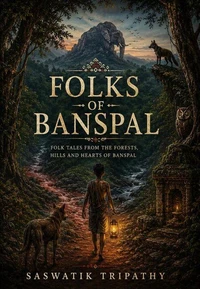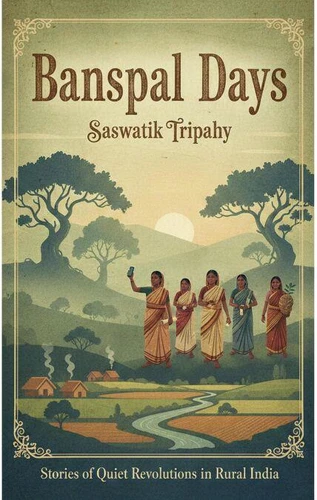



Saswatik Tripathy is a development practitioner, researcher, and author whose writing is deeply rooted in the lived realities of rural, tribal, and forest-dependent communities of Odisha, India. With extensive field experience in regions such as Keonjhar, Banspal, and Nayagarh, his work reflects a rare blend of grassroots engagement, policy understanding, and narrative sensitivity. As an author, Saswatik explores themes of commons governance, indigenous knowledge systems, subsistence economies, gendered livelihoods, and ecological resilience.
His writings often examine the intersection of people, forests, land, and water-bringing forward voices that are usually absent from mainstream development discourse. Drawing from direct engagement with communities like the Juanga and other indigenous groups, he documents how traditional practices, cultural beliefs, and collective institutions shape sustainable resource management. Saswatik's work spans research studies, analytical essays, project reports, and creative writing.
He has authored and contributed to studies on human-wildlife conflict, tree-borne oilseeds, watershed governance, and women's leadership through platforms such as Mahila Sabhas. Alongside non-fiction, he is also engaged in writing a fiction novel and a book on indigenous communities, where ecology, memory, and identity form central motifs. Through his writing, Saswatik Tripathy seeks not only to inform but to provoke reflection-challenging dominant development narratives and advocating for community-led, ecologically grounded pathways to sustainability.
His authorship stands at the confluence of activism, scholarship, and storytelling, making his voice both grounded and compelling.
His writings often examine the intersection of people, forests, land, and water-bringing forward voices that are usually absent from mainstream development discourse. Drawing from direct engagement with communities like the Juanga and other indigenous groups, he documents how traditional practices, cultural beliefs, and collective institutions shape sustainable resource management. Saswatik's work spans research studies, analytical essays, project reports, and creative writing.
He has authored and contributed to studies on human-wildlife conflict, tree-borne oilseeds, watershed governance, and women's leadership through platforms such as Mahila Sabhas. Alongside non-fiction, he is also engaged in writing a fiction novel and a book on indigenous communities, where ecology, memory, and identity form central motifs. Through his writing, Saswatik Tripathy seeks not only to inform but to provoke reflection-challenging dominant development narratives and advocating for community-led, ecologically grounded pathways to sustainability.
His authorship stands at the confluence of activism, scholarship, and storytelling, making his voice both grounded and compelling.