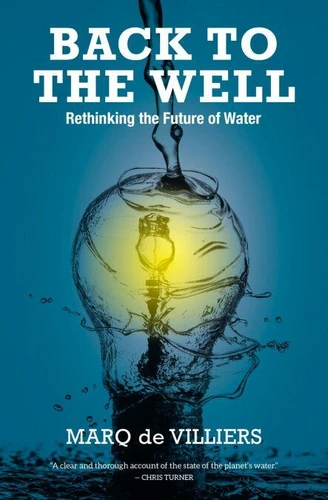
Back to the Well. Rethinking the Future of Water
Par :Formats :
Disponible dans votre compte client Decitre ou Furet du Nord dès validation de votre commande. Le format ePub est :
- Compatible avec une lecture sur My Vivlio (smartphone, tablette, ordinateur)
- Compatible avec une lecture sur liseuses Vivlio
- Pour les liseuses autres que Vivlio, vous devez utiliser le logiciel Adobe Digital Edition. Non compatible avec la lecture sur les liseuses Kindle, Remarkable et Sony
 , qui est-ce ?
Notre partenaire de plateforme de lecture numérique où vous retrouverez l'ensemble de vos ebooks gratuitement
Pour en savoir plus sur nos ebooks, consultez notre aide en ligne ici
C'est si simple ! Lisez votre ebook avec l'app Vivlio sur votre tablette, mobile ou ordinateur :

- Nombre de pages378
- FormatePub
- ISBN978-0-86492-802-3
- EAN9780864928023
- Date de parution15/09/2015
- Protection num.pas de protection
- Taille2 Mo
- Infos supplémentairesepub
- ÉditeurGoose Lane Editions
Résumé
Shortlisted for the Donner Prize and the Evelyn Richardson Non-Fiction AwardDroughts, floods, and contamination of fresh water in the american Southwest, in the Great Lakes region, in Australia, in northern china, in the Middle East, and in India have broguht the critical issue of water supply to the forefront of public consciousness. In dozens of countries, ordinary citizens have cause to worry about what (or how much) will come out of their taps - if they even have taps - and who will make sure it is available, affordable, and safe.
In this refreshing examination of the fate and future of water, Marq de Villiers takes on some of the biggest questions and shibboleths of the century. Who owns water? is access to water a human right? Who is responsible for keeping water clean and ensuring it gets to the people who need it most? Is privatization of ownership and supply networks an evil or an extension of the public trust? Fifteen years after the publication of Water: The Fate of Our Most Precious Resource, his influential Governor General's Award-winning book on the water crisis, de Villiers returns with a clear-eyed assessment of the politics of water - from the personal and commercial uses of water to the impact of climate change and global conflicts.
Examining how political ideologies often obscure the underlying issues, de Villiers makes the controversial suggestion that there is no global water crisis, but that water problems are fundamentally local and regional and can most effectively be addressed through local, rather than global, action.
In this refreshing examination of the fate and future of water, Marq de Villiers takes on some of the biggest questions and shibboleths of the century. Who owns water? is access to water a human right? Who is responsible for keeping water clean and ensuring it gets to the people who need it most? Is privatization of ownership and supply networks an evil or an extension of the public trust? Fifteen years after the publication of Water: The Fate of Our Most Precious Resource, his influential Governor General's Award-winning book on the water crisis, de Villiers returns with a clear-eyed assessment of the politics of water - from the personal and commercial uses of water to the impact of climate change and global conflicts.
Examining how political ideologies often obscure the underlying issues, de Villiers makes the controversial suggestion that there is no global water crisis, but that water problems are fundamentally local and regional and can most effectively be addressed through local, rather than global, action.