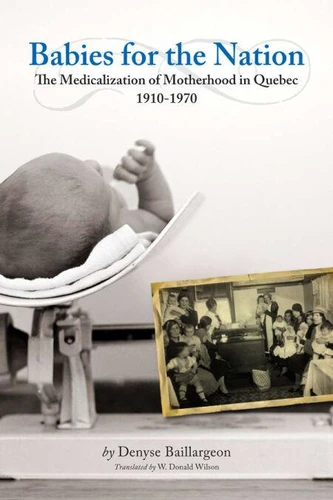
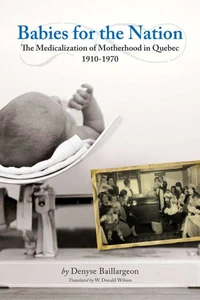
Described by some as a "necropolis for babies, " the province of Quebec in the early twentieth century recorded infant mortality rates, particularly among French-speaking Catholics, that were among the highest in the Western world. This "bleeding of the nation" gave birth to a vast movement for child welfare that paved the way for a medicalization of childbearing. In Babies for the Nation, basing her analysis on extensive documentary research and more than fifty interviews with mothers, Denyse Baillargeon sets out to understand how doctors were able to convince women to consult them, and why mothers chose to follow their advice.
Her analysis considers the medical discourse of the time, the development of free services made available to mothers between 1910 and 1970, and how mothers used these services. Showing the variety of social actors involved in this process (doctors, nurses, women's groups, members of the clergy, private enterprise, the state, and the mothers themselves), this study delineates the alliances and the conflicts that arose between them in a complex phenomenon that profoundly changed the nature of childbearing in Quebec.
Un Québec en mal d'enfants: La médicalisation de la maternité 1910-1970 was awarded the Clio-Québec Prize, the Lionel Groulx-Yves-Saint-Germain Prize, and the Jean-Charles-Falardeau Prize. This translation by W. Donald Wilson brings this important book to a new readership.
Described by some as a "necropolis for babies, " the province of Quebec in the early twentieth century recorded infant mortality rates, particularly among French-speaking Catholics, that were among the highest in the Western world. This "bleeding of the nation" gave birth to a vast movement for child welfare that paved the way for a medicalization of childbearing. In Babies for the Nation, basing her analysis on extensive documentary research and more than fifty interviews with mothers, Denyse Baillargeon sets out to understand how doctors were able to convince women to consult them, and why mothers chose to follow their advice.
Her analysis considers the medical discourse of the time, the development of free services made available to mothers between 1910 and 1970, and how mothers used these services. Showing the variety of social actors involved in this process (doctors, nurses, women's groups, members of the clergy, private enterprise, the state, and the mothers themselves), this study delineates the alliances and the conflicts that arose between them in a complex phenomenon that profoundly changed the nature of childbearing in Quebec.
Un Québec en mal d'enfants: La médicalisation de la maternité 1910-1970 was awarded the Clio-Québec Prize, the Lionel Groulx-Yves-Saint-Germain Prize, and the Jean-Charles-Falardeau Prize. This translation by W. Donald Wilson brings this important book to a new readership.