AWOL
Par : , ,Formats :
Disponible dans votre compte client Decitre ou Furet du Nord dès validation de votre commande. Le format ePub protégé est :
- Compatible avec une lecture sur My Vivlio (smartphone, tablette, ordinateur)
- Compatible avec une lecture sur liseuses Vivlio
- Pour les liseuses autres que Vivlio, vous devez utiliser le logiciel Adobe Digital Edition. Non compatible avec la lecture sur les liseuses Kindle, Remarkable et Sony
- Non compatible avec un achat hors France métropolitaine
 , qui est-ce ?
Notre partenaire de plateforme de lecture numérique où vous retrouverez l'ensemble de vos ebooks gratuitement
Pour en savoir plus sur nos ebooks, consultez notre aide en ligne ici
C'est si simple ! Lisez votre ebook avec l'app Vivlio sur votre tablette, mobile ou ordinateur :

- Nombre de pages36
- FormatePub
- ISBN978-1-910139-29-5
- EAN9781910139295
- Date de parution08/10/2015
- Protection num.Adobe DRM
- Taille3 Mo
- Infos supplémentairesepub
- ÉditeurThe Emma Press
Résumé
In rural Wales, wandering the dunes west of Pwllheli, John Fuller has composed a letter on the subject of travel: warning against it, wondering about people's presences and absences, and serenely admiring 'the Wales of sheep and song'. His correspondent, young Andrew Wynn Owen, replies with friendly enthusiasm, matching John's poetic form while flouting his advice and hopping from gallery to garret via Luxembourg and Venice.
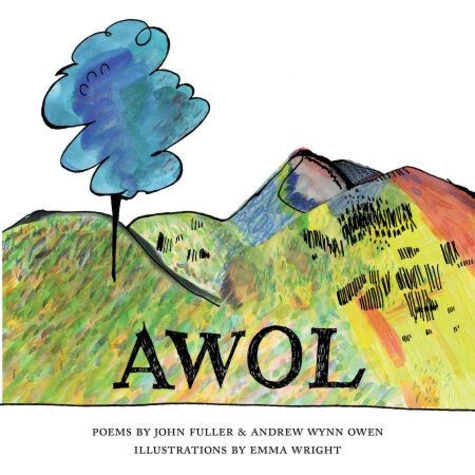
Between them, they consider: is it better to risk seeming 'stay-at-home, | A stick in mud' or 'to pass life scared | Of stillnesses' AWOL is an infinitely charming collaboration between the eminent poet John Fuller, with a career spanning over 50 years, and bright young poet Andrew Wynn Owen, whose first pamphlet was published in 2014. Beautifully produced in a large square format, this book is illustrated throughout in full-colour with watercolours and line drawings by Emma Wright.
The epistolary poems are composed in terza rima in tetrameter lines, reflecting both poets' love of metre and formal challenges.
Between them, they consider: is it better to risk seeming 'stay-at-home, | A stick in mud' or 'to pass life scared | Of stillnesses' AWOL is an infinitely charming collaboration between the eminent poet John Fuller, with a career spanning over 50 years, and bright young poet Andrew Wynn Owen, whose first pamphlet was published in 2014. Beautifully produced in a large square format, this book is illustrated throughout in full-colour with watercolours and line drawings by Emma Wright.
The epistolary poems are composed in terza rima in tetrameter lines, reflecting both poets' love of metre and formal challenges.