SOLDES
Jusqu'à -70% sur une sélection d'articles*

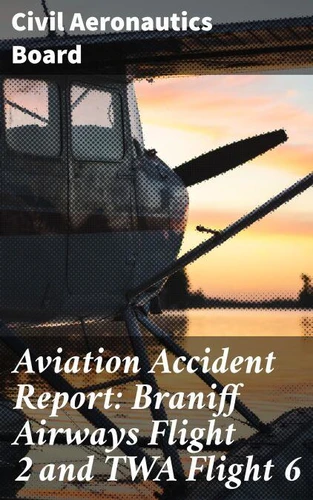
Aviation Accident Report: Braniff Airways Flight 2 and TWA Flight 6. Uncovering the Causes of Aviation Tragedies
Par :Formats :
Disponible dans votre compte client Decitre ou Furet du Nord dès validation de votre commande. Le format ePub est :
- Compatible avec une lecture sur My Vivlio (smartphone, tablette, ordinateur)
- Compatible avec une lecture sur liseuses Vivlio
- Pour les liseuses autres que Vivlio, vous devez utiliser le logiciel Adobe Digital Edition. Non compatible avec la lecture sur les liseuses Kindle, Remarkable et Sony
 , qui est-ce ?
Notre partenaire de plateforme de lecture numérique où vous retrouverez l'ensemble de vos ebooks gratuitement
Pour en savoir plus sur nos ebooks, consultez notre aide en ligne ici
C'est si simple ! Lisez votre ebook avec l'app Vivlio sur votre tablette, mobile ou ordinateur :

- Nombre de pages23
- FormatePub
- ISBN406-4-06-608555-1
- EAN4064066085551
- Date de parution08/12/2020
- Protection num.Digital Watermarking
- Taille641 Ko
- Infos supplémentairesepub
- ÉditeurGOOD PRESS
Résumé
The "Aviation Accident Report: Braniff Airways Flight 2 and TWA Flight 6" is a comprehensive investigation into two pivotal aviation disasters that occurred in the United States, eliciting profound implications for air travel safety and regulatory practices. Written in a meticulous, technical style, the report combines detailed factual accounts, analytical commentary, and statistical data, ensuring a rigorous examination of the events surrounding the accidents.
Situated within the larger context of aviation safety literature, the report serves as both a historical document and a critical appraisal, highlighting systemic issues within the aviation industry during the era. The Civil Aeronautics Board (CAB), an agency charged with the responsibility of regulating aviation safety and accident investigation in the mid-20th century, underpins this report'Äôs credibility.
By examining the factors leading to the incidents'Äîincluding crew performance, aircraft capabilities, and environmental conditions'Äîthe authors reveal not only the immediate causes but also the broader regulatory and operational challenges of the time. The CAB'Äôs findings were instrumental in shaping future safety protocols and legislation in the aviation sector. This meticulous report is recommended for aviation professionals, historians, and safety regulators alike, as it sheds light on the vital lessons learned from these tragic incidents.
Readers will gain a deeper understanding of the complexities surrounding air travel and the commitment to safety that informs the industry's evolution today.
Situated within the larger context of aviation safety literature, the report serves as both a historical document and a critical appraisal, highlighting systemic issues within the aviation industry during the era. The Civil Aeronautics Board (CAB), an agency charged with the responsibility of regulating aviation safety and accident investigation in the mid-20th century, underpins this report'Äôs credibility.
By examining the factors leading to the incidents'Äîincluding crew performance, aircraft capabilities, and environmental conditions'Äîthe authors reveal not only the immediate causes but also the broader regulatory and operational challenges of the time. The CAB'Äôs findings were instrumental in shaping future safety protocols and legislation in the aviation sector. This meticulous report is recommended for aviation professionals, historians, and safety regulators alike, as it sheds light on the vital lessons learned from these tragic incidents.
Readers will gain a deeper understanding of the complexities surrounding air travel and the commitment to safety that informs the industry's evolution today.