SOLDES
Jusqu'à -70% sur une sélection d'articles*

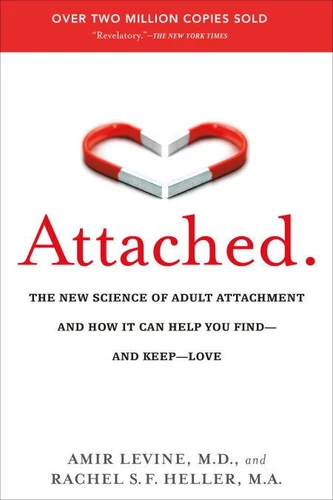
Attached: The New Science of Adult Attachment and How It Can Help You Find - And Keep - Love
Par : ,Formats :
Disponible dans votre compte client Decitre ou Furet du Nord dès validation de votre commande. Le format ePub protégé est :
- Compatible avec une lecture sur My Vivlio (smartphone, tablette, ordinateur)
- Compatible avec une lecture sur liseuses Vivlio
- Pour les liseuses autres que Vivlio, vous devez utiliser le logiciel Adobe Digital Edition. Non compatible avec la lecture sur les liseuses Kindle, Remarkable et Sony
- Non compatible avec un achat hors France métropolitaine
 , qui est-ce ?
Notre partenaire de plateforme de lecture numérique où vous retrouverez l'ensemble de vos ebooks gratuitement
Pour en savoir plus sur nos ebooks, consultez notre aide en ligne ici
C'est si simple ! Lisez votre ebook avec l'app Vivlio sur votre tablette, mobile ou ordinateur :

- Nombre de pages304
- FormatePub
- ISBN978-1-101-47516-4
- EAN9781101475164
- Date de parution30/12/2010
- Protection num.Adobe DRM
- Taille1 Mo
- Infos supplémentairesepub
- ÉditeurTarcher
Résumé
Discover how an understanding of adult attachment-the most advanced relationship science in existence today-can help us find and sustain love"Over a decade after its publication, one book on dating has people firmly in its grip."-The New York TimesWe already rely on science to tell us what to eat, when to exercise, and how long to sleep. Why not use science to help us improve our relationships? In this revolutionary book, psychiatrist and neuroscientist Dr.
Amir Levine and psychologist Rachel Heller scientifically explain why some people seem to navigate relationships effortlessly, while others struggle through adult attachment. Pioneered by psychologist John Bowlby in the 1950s, the field of attachment posits that everyone behaves in one of three distinct ways while in a relationship:. Anxious people are often preoccupied with their relationships and tend to worry about their partner's ability to love them back.
Avoidant people equate intimacy with a loss of independence and constantly try to minimize closeness. Secure people feel comfortable with intimacy and are usually warm and lovingAttached guides readers in determining what attachment style they and their mate (or potential mate) follow, offering a road map for building stronger, more fulfilling connections with the people they love.
Amir Levine and psychologist Rachel Heller scientifically explain why some people seem to navigate relationships effortlessly, while others struggle through adult attachment. Pioneered by psychologist John Bowlby in the 1950s, the field of attachment posits that everyone behaves in one of three distinct ways while in a relationship:. Anxious people are often preoccupied with their relationships and tend to worry about their partner's ability to love them back.
Avoidant people equate intimacy with a loss of independence and constantly try to minimize closeness. Secure people feel comfortable with intimacy and are usually warm and lovingAttached guides readers in determining what attachment style they and their mate (or potential mate) follow, offering a road map for building stronger, more fulfilling connections with the people they love.