SOLDES
Jusqu'à -70% sur une sélection d'articles*

Nouveauté
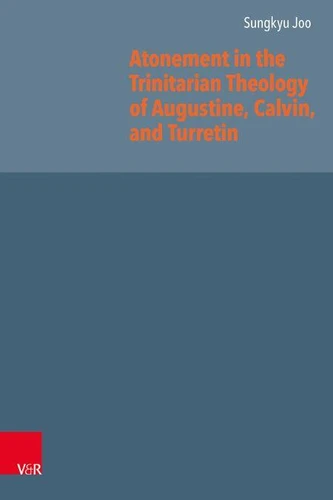
Atonement in the Trinitarian Theology of Augustine, Calvin, and Turretin
Par : ,Formats :
Disponible dans votre compte client Decitre ou Furet du Nord dès validation de votre commande. Le format PDF est :
- Compatible avec une lecture sur My Vivlio (smartphone, tablette, ordinateur)
- Compatible avec une lecture sur liseuses Vivlio
- Pour les liseuses autres que Vivlio, vous devez utiliser le logiciel Adobe Digital Edition. Non compatible avec la lecture sur les liseuses Kindle, Remarkable et Sony
 , qui est-ce ?
Notre partenaire de plateforme de lecture numérique où vous retrouverez l'ensemble de vos ebooks gratuitement
Pour en savoir plus sur nos ebooks, consultez notre aide en ligne ici
C'est si simple ! Lisez votre ebook avec l'app Vivlio sur votre tablette, mobile ou ordinateur :

- Nombre de pages284
- FormatPDF
- ISBN978-3-647-50285-4
- EAN9783647502854
- Date de parution13/07/2026
- Protection num.pas de protection
- Taille2 Mo
- Infos supplémentairespdf
- ÉditeurVandenhoeck & Ruprecht
Résumé
Why did Christ have to die for us? In this book Sungkyu Joo addresses that enduring question by looking beyond isolated theories of the atonement and turning instead to the doctrine of the Trinity itself. While many modern discussions focus on the cross alone, the author argues that Christ's saving death can only be properly understood within the eternal relationship between the Father and the Son.
Drawing on the classical insights of Augustine, Calvin, and Turretin, the book shows how their shared Trinitarian framework provides a coherent and compelling foundation for understanding why Christ's atoning work was not accidental or arbitrary, but hypothetically necessary. At the same time, Sungkyu Joo explains why alternative approaches - especially those associated with anti-Trinitarian thinkers such as Servetus and Socinus - ultimately fail to offer a stable account of Christ's atoning work.
By weakening the natural and personal relationship within God or introducing hierarchy into the divine life, these views undermine the very conditions required for a free and spontaneous act of salvation. In contrast, the classical and Reformed tradition presents a holistic concept of God in which the natural generation of the Son and the Trinity's spontaneous wills work together rather than against each other.
Written out of both pastoral concern and academic study, this book offers a clear and accessible defense of Christ's vicarious satisfaction as a necessary expression of God's triune life and saving love.
Drawing on the classical insights of Augustine, Calvin, and Turretin, the book shows how their shared Trinitarian framework provides a coherent and compelling foundation for understanding why Christ's atoning work was not accidental or arbitrary, but hypothetically necessary. At the same time, Sungkyu Joo explains why alternative approaches - especially those associated with anti-Trinitarian thinkers such as Servetus and Socinus - ultimately fail to offer a stable account of Christ's atoning work.
By weakening the natural and personal relationship within God or introducing hierarchy into the divine life, these views undermine the very conditions required for a free and spontaneous act of salvation. In contrast, the classical and Reformed tradition presents a holistic concept of God in which the natural generation of the Son and the Trinity's spontaneous wills work together rather than against each other.
Written out of both pastoral concern and academic study, this book offers a clear and accessible defense of Christ's vicarious satisfaction as a necessary expression of God's triune life and saving love.