SOLDES
Jusqu'à -70% sur une sélection d'articles*

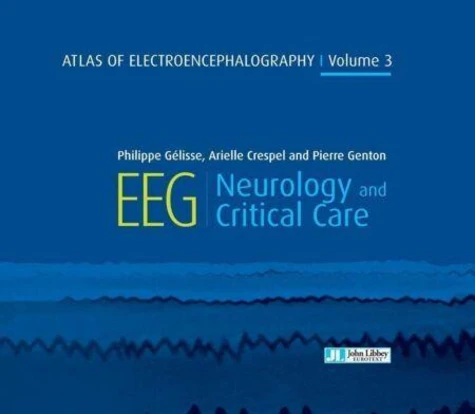
Atlas of Electroencephalography : Neurology and critical care - Volume 3
Par : , ,Formats :
Disponible dans votre compte client Decitre ou Furet du Nord dès validation de votre commande. Le format ePub est :
- Compatible avec une lecture sur My Vivlio (smartphone, tablette, ordinateur)
- Compatible avec une lecture sur liseuses Vivlio
- Pour les liseuses autres que Vivlio, vous devez utiliser le logiciel Adobe Digital Edition. Non compatible avec la lecture sur les liseuses Kindle, Remarkable et Sony
 , qui est-ce ?
Notre partenaire de plateforme de lecture numérique où vous retrouverez l'ensemble de vos ebooks gratuitement
Pour en savoir plus sur nos ebooks, consultez notre aide en ligne ici
C'est si simple ! Lisez votre ebook avec l'app Vivlio sur votre tablette, mobile ou ordinateur :

- Nombre de pages346
- FormatePub
- ISBN978-2-7420-1621-1
- EAN9782742016211
- Date de parution01/06/2019
- Copier CollerNon Autorisé
- Protection num.Digital Watermarking
- Taille152 Mo
- Infos supplémentairesepub
- ÉditeurJohn Libbey
Résumé
The third volume of the series of Atlases deals with the use and usefulness of electroencephalography (EEG) in neurology. While EEG is universally recognized as a first-order investigation method in epilepsy (see Volume 2), and as an important contributor in sleep medicine, practical neurology has tended to neglect the value of this classical and established neurophysiological tool. A rich, extensively commented and analyzed collection of EEG plates is presented here.
The reader will be compelled to remember that EEG is the easiest way to assess parameters like state of vigilance, risk of seizure activity, type and degree of functional impairment, in a very clinical and practical setting. The authors cover many aspects of neurological practices where the EEG may help in diagnosis and treatment: metabolic and other encephalopathies, infectious and inflammatory conditions, vascular disorders.
It is particularly useful -and difficult- to distinguish between epileptic phenomena and EEG changes associated with metabolic abnormalities: a careful assessment of the EEG is of paramount practical importance here. Migraine is not always simple and there are many overlaps with other types of neurological diseases: the EEG may play a major part in helping the clinician in doubtful cases. Similarly, the diagnosis of dementia does certainly not rest on the EEG but many particular aspects concerning diagnostic overlaps or copathologies are aptly explored by the EEG.
Lastly, even the neurosurgeon may need the EEG to monitor trauma, tumor, bleeding... This Atlas will provide both examples and guidelines for the optimal use of the EEG in neurology.
The reader will be compelled to remember that EEG is the easiest way to assess parameters like state of vigilance, risk of seizure activity, type and degree of functional impairment, in a very clinical and practical setting. The authors cover many aspects of neurological practices where the EEG may help in diagnosis and treatment: metabolic and other encephalopathies, infectious and inflammatory conditions, vascular disorders.
It is particularly useful -and difficult- to distinguish between epileptic phenomena and EEG changes associated with metabolic abnormalities: a careful assessment of the EEG is of paramount practical importance here. Migraine is not always simple and there are many overlaps with other types of neurological diseases: the EEG may play a major part in helping the clinician in doubtful cases. Similarly, the diagnosis of dementia does certainly not rest on the EEG but many particular aspects concerning diagnostic overlaps or copathologies are aptly explored by the EEG.
Lastly, even the neurosurgeon may need the EEG to monitor trauma, tumor, bleeding... This Atlas will provide both examples and guidelines for the optimal use of the EEG in neurology.