Focuses on psychology, emotional resilience, and modern identity in contemporary society.
Nouveauté
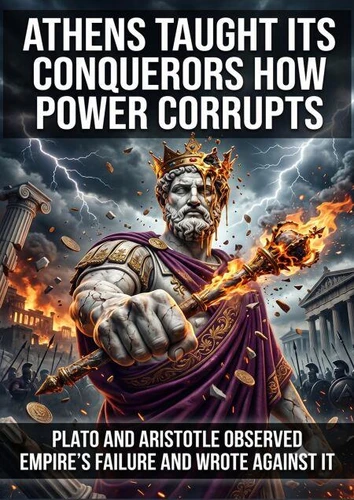
Athens Taught Its Conquerors How Power Corrupts. Plato and Aristotle Observed Empire's Failure and Wrote Against It
Par :Formats :
Disponible dans votre compte client Decitre ou Furet du Nord dès validation de votre commande. Le format ePub est :
- Compatible avec une lecture sur My Vivlio (smartphone, tablette, ordinateur)
- Compatible avec une lecture sur liseuses Vivlio
- Pour les liseuses autres que Vivlio, vous devez utiliser le logiciel Adobe Digital Edition. Non compatible avec la lecture sur les liseuses Kindle, Remarkable et Sony
 , qui est-ce ?
Notre partenaire de plateforme de lecture numérique où vous retrouverez l'ensemble de vos ebooks gratuitement
Pour en savoir plus sur nos ebooks, consultez notre aide en ligne ici
C'est si simple ! Lisez votre ebook avec l'app Vivlio sur votre tablette, mobile ou ordinateur :

- Nombre de pages147
- FormatePub
- ISBN978-3-565-55270-2
- EAN9783565552702
- Date de parution09/07/2026
- Protection num.pas de protection
- Taille1 Mo
- Infos supplémentairesepub
- ÉditeurEmphaloz Publishing House
Résumé
Greek philosophy did not emerge from calm reflection. It was forged in the wreckage of the Peloponnesian War, a conflict that shattered Athens and left its thinkers searching for order. Plato watched his city execute his teacher. Aristotle fled Athens fearing the same fate. This book traces how their ideas-the Forms, the ideal state, ethics as a science-were responses to political collapse. It shows Plato's Republic as a remedy for democratic chaos, and Aristotle's Politics as an attempt to classify governments that had already failed.
The war did not just influence philosophy; it demanded it. By placing these thinkers in the context of military defeat, civil strife, and imperial overreach, this account reveals classical Greek philosophy as a survival strategy for a civilization in crisis. For students of ancient philosophy and the history of political thought, this is a study of how the mind rebuilds when the world falls apart.
The war did not just influence philosophy; it demanded it. By placing these thinkers in the context of military defeat, civil strife, and imperial overreach, this account reveals classical Greek philosophy as a survival strategy for a civilization in crisis. For students of ancient philosophy and the history of political thought, this is a study of how the mind rebuilds when the world falls apart.
A propos de Emma Whitaker
24,99 €
24,99 €