
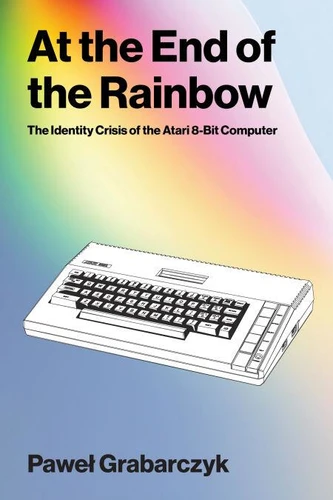
At the End of the Rainbow. The Identity Crisis of the Atari 8-Bit Computer
Par :Formats :
Disponible dans votre compte client Decitre ou Furet du Nord dès validation de votre commande. Le format ePub protégé est :
- Compatible avec une lecture sur My Vivlio (smartphone, tablette, ordinateur)
- Compatible avec une lecture sur liseuses Vivlio
- Pour les liseuses autres que Vivlio, vous devez utiliser le logiciel Adobe Digital Edition. Non compatible avec la lecture sur les liseuses Kindle, Remarkable et Sony
- Non compatible avec un achat hors France métropolitaine
 , qui est-ce ?
Notre partenaire de plateforme de lecture numérique où vous retrouverez l'ensemble de vos ebooks gratuitement
Pour en savoir plus sur nos ebooks, consultez notre aide en ligne ici
C'est si simple ! Lisez votre ebook avec l'app Vivlio sur votre tablette, mobile ou ordinateur :

- Nombre de pages314
- Date de parution03/11/2026
- FormatePub
- ISBN978-0-262-05510-9
- EAN9780262055109
- Protection num.Adobe DRM
- Infos supplémentairesepub
- ÉditeurThe MIT Press
Résumé
The shifting identity of the Atari 8-bit family, and how a single platform can provoke a universal debate about the purpose of computing. Throughout the late 1970s and early 1980s, Atari became synonymous with arcade gaming, producing iconic games such as Pong and Asteroids. Yet the company's ambitions extended beyond games and consoles. In 1979, Atari launched its first 8-bit computer-a platform initially designed as a console before its release into the market as a computer.
This ambiguous identity produced a curious marketing campaign that downplayed the computer's main selling point as a gaming machine; within three years, Atari had switched tactics and repackaged the computer as a console. In At the End of the Rainbow, Pawel Grabarczyk examines how a device that had to shed its image as a "glorified console" later became a console accused of being a computer in disguise, resulting in its varied reception across the globe.
As the Atari 8-bit platform faded into obsolescence in the West, it found unexpected success in other parts of the world-Chile, Eastern Europe, and especially in socialist Poland, where it led the digital revolution and kickstarted the domestic gaming industry. Grabarczyk traces these divergent trajectories across capitalist and socialist contexts and explores how the platform's fate sparked a larger debate about the boundaries between console and computer, between playful and serious users-and about the very purpose of computing itself.
This ambiguous identity produced a curious marketing campaign that downplayed the computer's main selling point as a gaming machine; within three years, Atari had switched tactics and repackaged the computer as a console. In At the End of the Rainbow, Pawel Grabarczyk examines how a device that had to shed its image as a "glorified console" later became a console accused of being a computer in disguise, resulting in its varied reception across the globe.
As the Atari 8-bit platform faded into obsolescence in the West, it found unexpected success in other parts of the world-Chile, Eastern Europe, and especially in socialist Poland, where it led the digital revolution and kickstarted the domestic gaming industry. Grabarczyk traces these divergent trajectories across capitalist and socialist contexts and explores how the platform's fate sparked a larger debate about the boundaries between console and computer, between playful and serious users-and about the very purpose of computing itself.