SOLDES
Jusqu'à -70% sur une sélection d'articles*

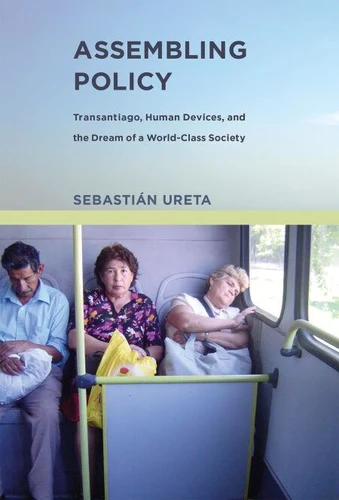
Assembling Policy. Transantiago, Human Devices, and the Dream of a World-Class Society
Par :Formats :
Disponible dans votre compte client Decitre ou Furet du Nord dès validation de votre commande. Le format ePub protégé est :
- Compatible avec une lecture sur My Vivlio (smartphone, tablette, ordinateur)
- Compatible avec une lecture sur liseuses Vivlio
- Pour les liseuses autres que Vivlio, vous devez utiliser le logiciel Adobe Digital Edition. Non compatible avec la lecture sur les liseuses Kindle, Remarkable et Sony
- Non compatible avec un achat hors France métropolitaine
 , qui est-ce ?
Notre partenaire de plateforme de lecture numérique où vous retrouverez l'ensemble de vos ebooks gratuitement
Pour en savoir plus sur nos ebooks, consultez notre aide en ligne ici
C'est si simple ! Lisez votre ebook avec l'app Vivlio sur votre tablette, mobile ou ordinateur :

- Nombre de pages224
- FormatePub
- ISBN978-0-262-33096-1
- EAN9780262330961
- Date de parution20/11/2015
- Protection num.Adobe DRM
- Taille2 Mo
- Infos supplémentairesepub
- ÉditeurThe MIT Press
Résumé
An examination of how human beings are brought into the planning of complex infrastructure projects, through analysis of a controversial public transportation project. Policymakers are regularly confronted by complaints that ordinary people are left out of the planning and managing of complex infrastructure projects. In this book, Sebastián Ureta argues that humans, both individually and collectively, are always at the heart of infrastructure policy; the issue is how they are brought into it.
Ureta develops his argument through the case of Transantiago, a massive public transportation project in the city of Santiago, proposed in 2000, launched in 2007, and in 2012 called "the worst public policy ever implemented in our country" by a Chilean government spokesman. Ureta examines Transantiago as a policy assemblage formed by an array of heterogeneous elements-including, crucially, "human devices, " or artifacts and practices through which humans were brought into infrastructure planning and implementation.
Ureta traces the design and operation of Transantiago through four configurations: crisis, infrastructuration, disruption, and normalization. In the crisis phase, humans were enacted both as consumers and as participants in the transformation of Santiago into a "world-class" city, but during infrastructuration the "active citizen" went missing. The launch of Transantiago caused huge disruptions, in part because users challenged their role as mere consumers and instead enacted unexpected human devices.
Resisting calls for radical reform, policymakers insisted on normalizing Transantiago, transforming it into a permanent failing system. Drawing on Chile's experience, Ureta argues that if we understand policy as a series of heterogeneous assemblages, infrastructure policymaking would be more inclusive, reflexive, and responsible.
Ureta develops his argument through the case of Transantiago, a massive public transportation project in the city of Santiago, proposed in 2000, launched in 2007, and in 2012 called "the worst public policy ever implemented in our country" by a Chilean government spokesman. Ureta examines Transantiago as a policy assemblage formed by an array of heterogeneous elements-including, crucially, "human devices, " or artifacts and practices through which humans were brought into infrastructure planning and implementation.
Ureta traces the design and operation of Transantiago through four configurations: crisis, infrastructuration, disruption, and normalization. In the crisis phase, humans were enacted both as consumers and as participants in the transformation of Santiago into a "world-class" city, but during infrastructuration the "active citizen" went missing. The launch of Transantiago caused huge disruptions, in part because users challenged their role as mere consumers and instead enacted unexpected human devices.
Resisting calls for radical reform, policymakers insisted on normalizing Transantiago, transforming it into a permanent failing system. Drawing on Chile's experience, Ureta argues that if we understand policy as a series of heterogeneous assemblages, infrastructure policymaking would be more inclusive, reflexive, and responsible.