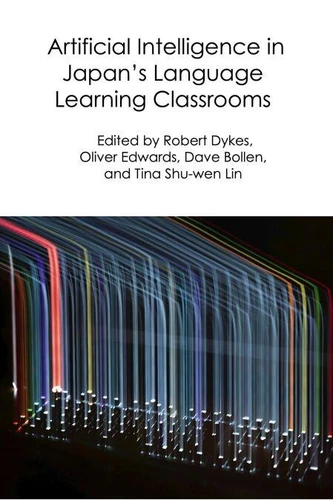
Artificial Intelligence in Japan’s Language Learning Classrooms. Life and Education in Japan, #9
Par : , , ,Formats :
Disponible dans votre compte client Decitre ou Furet du Nord dès validation de votre commande. Le format ePub est :
- Compatible avec une lecture sur My Vivlio (smartphone, tablette, ordinateur)
- Compatible avec une lecture sur liseuses Vivlio
- Pour les liseuses autres que Vivlio, vous devez utiliser le logiciel Adobe Digital Edition. Non compatible avec la lecture sur les liseuses Kindle, Remarkable et Sony
 , qui est-ce ?
Notre partenaire de plateforme de lecture numérique où vous retrouverez l'ensemble de vos ebooks gratuitement
Pour en savoir plus sur nos ebooks, consultez notre aide en ligne ici
C'est si simple ! Lisez votre ebook avec l'app Vivlio sur votre tablette, mobile ou ordinateur :

- FormatePub
- ISBN8235166592
- EAN9798235166592
- Date de parution06/06/2026
- Protection num.pas de protection
- Infos supplémentairesepub
- ÉditeurIoakim Ioakim
Résumé
Artificial Intelligence in Japan's Language Learning Classrooms brings together leading researchers and practitioners to explore how generative AI is reshaping language education in Japan. Moving beyond initial enthusiasm and concern, the volume offers a nuanced and critical examination of AI's role in second language acquisition, classroom practice, and institutional policy. The contributors highlight a wide range of perspectives, from practical applications such as AI-assisted feedback, writing support, and pragmatic instruction, to broader questions about motivation, teacher beliefs, and the evolving roles of learners and educators.
At the same time, the authors engage directly with pressing challenges, including issues of ethics, bias, academic integrity, and the implications of AI for equitable and inclusive language education. Grounded in the Japanese context yet relevant to global debates, this volume provides valuable insights for educators, researchers, and policymakers seeking to understand and respond to the rapidly changing relationship between language learning and artificial intelligence.
At the same time, the authors engage directly with pressing challenges, including issues of ethics, bias, academic integrity, and the implications of AI for equitable and inclusive language education. Grounded in the Japanese context yet relevant to global debates, this volume provides valuable insights for educators, researchers, and policymakers seeking to understand and respond to the rapidly changing relationship between language learning and artificial intelligence.