
Nouveauté
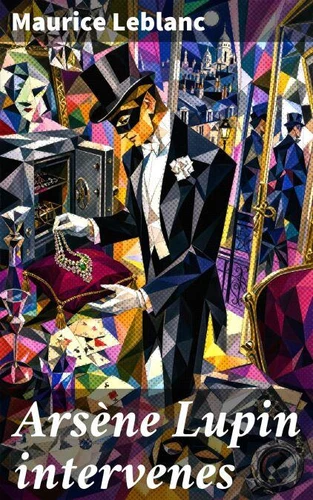
Arsène Lupin intervenes
Par :Formats :
Disponible dans votre compte client Decitre ou Furet du Nord dès validation de votre commande. Le format ePub est :
- Compatible avec une lecture sur My Vivlio (smartphone, tablette, ordinateur)
- Compatible avec une lecture sur liseuses Vivlio
- Pour les liseuses autres que Vivlio, vous devez utiliser le logiciel Adobe Digital Edition. Non compatible avec la lecture sur les liseuses Kindle, Remarkable et Sony
 , qui est-ce ?
Notre partenaire de plateforme de lecture numérique où vous retrouverez l'ensemble de vos ebooks gratuitement
Pour en savoir plus sur nos ebooks, consultez notre aide en ligne ici
C'est si simple ! Lisez votre ebook avec l'app Vivlio sur votre tablette, mobile ou ordinateur :

- Nombre de pages155
- FormatePub
- ISBN859-65--4790429-8
- EAN8596547904298
- Date de parution29/06/2026
- Protection num.Digital Watermarking
- Taille753 Ko
- Infos supplémentairesepub
- ÉditeurGOOD PRESS
Résumé
In Arsène Lupin Intervenes, Maurice Leblanc gathers a sequence of elegant, fast-moving adventures in which the gentleman-thief repeatedly inserts himself into crimes, intrigues, and puzzles that confound ordinary minds. Blending detective fiction with the caper, the stories display Leblanc's signature lightness: polished wit, theatrical reversals, ingenious disguises, and plots driven as much by charm as by deduction.
Written in the vibrant tradition of early twentieth-century French popular fiction, the book revises the Sherlockian model by placing at its center not the official investigator but the audacious, morally elastic master criminal whose intelligence outshines the law. Leblanc, one of France's great architects of modern crime literature, created Arsène Lupin in 1905 at a moment when mass readership, serialized publication, and fascination with urban modernity were transforming the novel.
His Normandy background, journalistic discipline, and keen awareness of public appetite for sensation and irony helped shape a hero who is at once national fantasy, social critic, and entertainer. Lupin's appeal lies in this paradox: he is both outlaw and arbiter of justice. This volume is especially recommended to readers interested in the evolution of detective fiction, the cultural imagination of the Belle Époque, and the enduring seductions of style, intelligence, and narrative play.
Written in the vibrant tradition of early twentieth-century French popular fiction, the book revises the Sherlockian model by placing at its center not the official investigator but the audacious, morally elastic master criminal whose intelligence outshines the law. Leblanc, one of France's great architects of modern crime literature, created Arsène Lupin in 1905 at a moment when mass readership, serialized publication, and fascination with urban modernity were transforming the novel.
His Normandy background, journalistic discipline, and keen awareness of public appetite for sensation and irony helped shape a hero who is at once national fantasy, social critic, and entertainer. Lupin's appeal lies in this paradox: he is both outlaw and arbiter of justice. This volume is especially recommended to readers interested in the evolution of detective fiction, the cultural imagination of the Belle Époque, and the enduring seductions of style, intelligence, and narrative play.
A propos de Maurice Leblanc


0,99 €

The Crystal Stopper
E-book
0,99 €
The Hollow Needle
E-book
0,99 €

Arsène Lupin
E-book
0,99 €

0,99 €
2,99 €

0,99 €