SOLDES
Jusqu'à -70% sur une sélection d'articles*

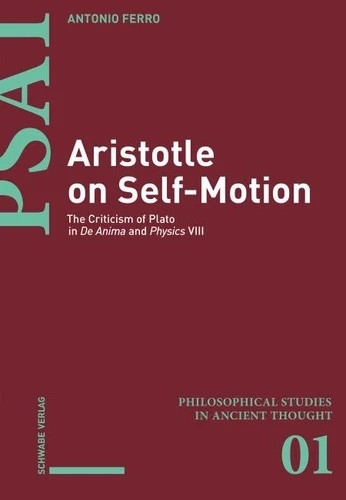
Aristotle on Self-Motion. The Criticism of Plato in De Anima and Physics VIII
Par :Formats :
Disponible dans votre compte client Decitre ou Furet du Nord dès validation de votre commande. Le format PDF est :
- Compatible avec une lecture sur My Vivlio (smartphone, tablette, ordinateur)
- Compatible avec une lecture sur liseuses Vivlio
- Pour les liseuses autres que Vivlio, vous devez utiliser le logiciel Adobe Digital Edition. Non compatible avec la lecture sur les liseuses Kindle, Remarkable et Sony
 , qui est-ce ?
Notre partenaire de plateforme de lecture numérique où vous retrouverez l'ensemble de vos ebooks gratuitement
Pour en savoir plus sur nos ebooks, consultez notre aide en ligne ici
C'est si simple ! Lisez votre ebook avec l'app Vivlio sur votre tablette, mobile ou ordinateur :

- Nombre de pages464
- FormatPDF
- ISBN978-3-7965-4363-0
- EAN9783796543630
- Date de parution11/04/2022
- Protection num.Digital Watermarking
- Taille3 Mo
- Infos supplémentairespdf
- ÉditeurSchwabe & Co
Résumé
What is Aristotle's considered view of animal self-motion? According to several scholars, Aristotle ends up rejecting this very notion as a result of his criticism of Plato's theory of a self-moving soul. Contrary to this still widespread assumption, the present study argues that his critical engagement with Plato is not confined to negative results, but achieves largely positive outcomes, which add up to a rich and nuanced picture of self-motion.??
Ferro makes his case by offering a novel reading of a handful of controversial passages from De Anima (I 3-4; III 9-10) and Physics VIII, where Aristotle reacts to three aspects of Plato's theory of self-motion: the claim that soul itself is a self-mover (and therefore a proper subject of motion), the assumption that self-movers enjoy strong causal autonomy, and the link between motion, desire and soul partition.
Through a careful reading of the relevant passages, which does justice to their proper context and significance, Ferro shows that Aristotle's critical re-appropriation of self-motion results in a largely coherent doctrine with major repercussions for Aristotelian psychology and philosophy of nature.
Through a careful reading of the relevant passages, which does justice to their proper context and significance, Ferro shows that Aristotle's critical re-appropriation of self-motion results in a largely coherent doctrine with major repercussions for Aristotelian psychology and philosophy of nature.