SOLDES
Jusqu'à -70% sur une sélection d'articles*

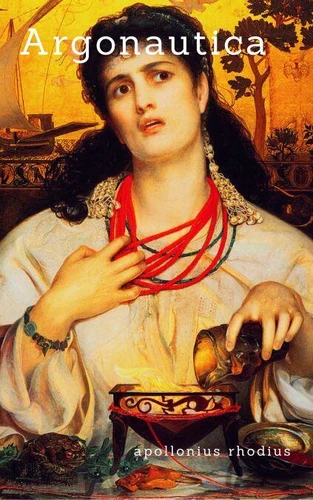
Argonautica (Zongo Classics)
Par :Formats :
Disponible dans votre compte client Decitre ou Furet du Nord dès validation de votre commande. Le format ePub est :
- Compatible avec une lecture sur My Vivlio (smartphone, tablette, ordinateur)
- Compatible avec une lecture sur liseuses Vivlio
- Pour les liseuses autres que Vivlio, vous devez utiliser le logiciel Adobe Digital Edition. Non compatible avec la lecture sur les liseuses Kindle, Remarkable et Sony
 , qui est-ce ?
Notre partenaire de plateforme de lecture numérique où vous retrouverez l'ensemble de vos ebooks gratuitement
Pour en savoir plus sur nos ebooks, consultez notre aide en ligne ici
C'est si simple ! Lisez votre ebook avec l'app Vivlio sur votre tablette, mobile ou ordinateur :

- Nombre de pages150
- FormatePub
- ISBN978-1-236-72397-0
- EAN9781236723970
- Date de parution07/04/2017
- Protection num.Digital Watermarking
- Taille3 Mo
- Infos supplémentairesepub
- ÉditeurZongo
Résumé
The Argonautica (Greek: ??????????? Argonautika) is a Greek epic poem written by Apollonius Rhodius in the 3rd century BC. The only surviving Hellenistic epic, the Argonautica tells the myth of the voyage of Jason and the Argonauts to retrieve the Golden Fleece from remote Colchis. Their heroic adventures and Jason's relationship with the dangerous Colchian princess/sorceress Medea were already well known to Hellenistic audiences, which enabled Apollonius to go beyond a simple narrative, giving it a scholarly emphasis suitable to the times.
It was the age of the great Library of Alexandria, and his epic incorporates his researches in geography, ethnography, comparative religion, and Homeric literature. However, his main contribution to the epic tradition lies in his development of the love between hero and heroine - he seems to have been the first narrative poet to study "the pathology of love". His Argonautica had a profound impact on Latin poetry: it was translated by Varro Atacinus and imitated by Valerius Flaccus; it influenced Catullus and Ovid; and it provided Virgil with a model for his Roman epic, the Aeneid.
It was the age of the great Library of Alexandria, and his epic incorporates his researches in geography, ethnography, comparative religion, and Homeric literature. However, his main contribution to the epic tradition lies in his development of the love between hero and heroine - he seems to have been the first narrative poet to study "the pathology of love". His Argonautica had a profound impact on Latin poetry: it was translated by Varro Atacinus and imitated by Valerius Flaccus; it influenced Catullus and Ovid; and it provided Virgil with a model for his Roman epic, the Aeneid.