
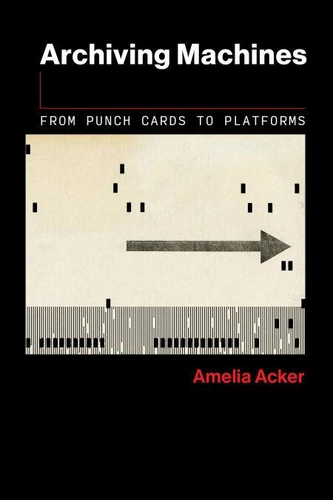
Archiving Machines. From Punch Cards to Platforms
Par :Formats :
Disponible dans votre compte client Decitre ou Furet du Nord dès validation de votre commande. Le format ePub protégé est :
- Compatible avec une lecture sur My Vivlio (smartphone, tablette, ordinateur)
- Compatible avec une lecture sur liseuses Vivlio
- Pour les liseuses autres que Vivlio, vous devez utiliser le logiciel Adobe Digital Edition. Non compatible avec la lecture sur les liseuses Kindle, Remarkable et Sony
- Non compatible avec un achat hors France métropolitaine
 , qui est-ce ?
Notre partenaire de plateforme de lecture numérique où vous retrouverez l'ensemble de vos ebooks gratuitement
Pour en savoir plus sur nos ebooks, consultez notre aide en ligne ici
C'est si simple ! Lisez votre ebook avec l'app Vivlio sur votre tablette, mobile ou ordinateur :

- Nombre de pages258
- FormatePub
- ISBN978-0-262-38457-5
- EAN9780262384575
- Date de parution11/11/2025
- Protection num.Adobe DRM
- Taille11 Mo
- Infos supplémentairesepub
- ÉditeurThe MIT Press
Résumé
The story of the rise of networked data through the evolution of archiving and digital storage.2026 PROSE Award Winner: Computing and Information SciencesArchiving Machines advances our understanding of memory, information, and data by charting the struggle between the computing technologies that archive data and the cultures of information that have led to platforms that assert control over its use.
Amelia Acker examines the origins of data archives and the computing processes of storage, exchange, and transmission. Each chapter introduces data archiving processes that relate to the evolution of data sovereignty we experience today: from magnetic tape and timesharing computer models from the 1950s, to the establishment of data banks and the rise of database processing and managed data silos in the 1970s, to file structures and virtual containers in cloud-based information services over the past 40 years.
Amelia Acker examines the origins of data archives and the computing processes of storage, exchange, and transmission. Each chapter introduces data archiving processes that relate to the evolution of data sovereignty we experience today: from magnetic tape and timesharing computer models from the 1950s, to the establishment of data banks and the rise of database processing and managed data silos in the 1970s, to file structures and virtual containers in cloud-based information services over the past 40 years.