SOLDES
Jusqu'à -70% sur une sélection d'articles*

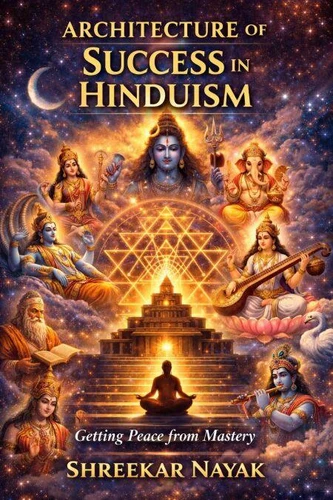
Architecture of success in Hinduism. The base of Hindu philosophy, #2
Par :Formats :
Disponible dans votre compte client Decitre ou Furet du Nord dès validation de votre commande. Le format ePub est :
- Compatible avec une lecture sur My Vivlio (smartphone, tablette, ordinateur)
- Compatible avec une lecture sur liseuses Vivlio
- Pour les liseuses autres que Vivlio, vous devez utiliser le logiciel Adobe Digital Edition. Non compatible avec la lecture sur les liseuses Kindle, Remarkable et Sony
 , qui est-ce ?
Notre partenaire de plateforme de lecture numérique où vous retrouverez l'ensemble de vos ebooks gratuitement
Pour en savoir plus sur nos ebooks, consultez notre aide en ligne ici
C'est si simple ! Lisez votre ebook avec l'app Vivlio sur votre tablette, mobile ou ordinateur :

- FormatePub
- ISBN8235186606
- EAN9798235186606
- Date de parution18/04/2026
- Protection num.pas de protection
- Infos supplémentairesepub
- ÉditeurIoakim Ioakim
Résumé
Architecture of Success in Hinduism is a profound exploration of the timeless wisdom embedded in Sanatana Dharma, presenting success not as a material achievement alone, but as a complete alignment of life with cosmic order. This book dives deep into the foundational pillars of Hindu philosophy, revealing how every aspect of life is structured through divine intelligence and purposeful design. At its core, the book explains the Purusharthas-Dharma, Artha, Kama, and Moksha-as the essential goals of human existence, forming a balanced framework for personal, social, and spiritual fulfillment.
It further explores the cosmic functioning of the universe through the three forms of Lord Vishnu: Karanodakshayi Vishnu, Garbhodakshayi Vishnu, and Kshirodakshayi Vishnu, illustrating how creation, preservation, and sustenance operate at different levels of reality. The book also sheds light on the mystical and symbolic significance of the Eleven Rudras, representing transformation, destruction of ignorance, and renewal of consciousness.
Alongside this, it elaborates on the Samskaras, the sacred life-cycle rituals that shape human character from birth to liberation, and the Ashramas, the four stages of life that guide an individual from studenthood to spiritual realization. By weaving together philosophy, cosmology, and life management principles, this book presents Hinduism not merely as a religion but as a complete system of success architecture-designed to elevate human life toward harmony, purpose, and ultimate liberation.
It further explores the cosmic functioning of the universe through the three forms of Lord Vishnu: Karanodakshayi Vishnu, Garbhodakshayi Vishnu, and Kshirodakshayi Vishnu, illustrating how creation, preservation, and sustenance operate at different levels of reality. The book also sheds light on the mystical and symbolic significance of the Eleven Rudras, representing transformation, destruction of ignorance, and renewal of consciousness.
Alongside this, it elaborates on the Samskaras, the sacred life-cycle rituals that shape human character from birth to liberation, and the Ashramas, the four stages of life that guide an individual from studenthood to spiritual realization. By weaving together philosophy, cosmology, and life management principles, this book presents Hinduism not merely as a religion but as a complete system of success architecture-designed to elevate human life toward harmony, purpose, and ultimate liberation.