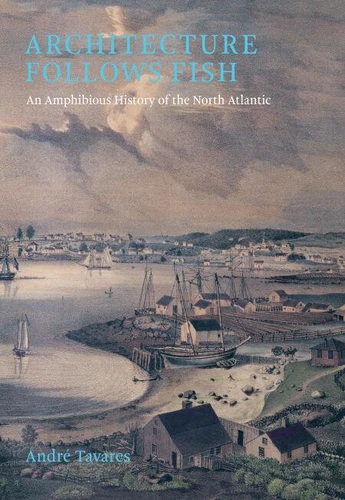
A highly original exploration of the history of architecture in relation to fish, shedding light on the connection between marine environments and terrestrial landscapes. Architecture Follows Fish is set in the North Atlantic, and its protagonist is fish. In this book author and architect André Tavares explores the notion of fishing architecture, a concept coined to describe architectural practices that are spawned by fisheries.
To encompass the scope of fishing architecture, and to establish the connections between marine ecology and architectural practice, the book oscillates between different continents, centuries, and species. Fisheries are unique, and this book sheds light on that uniqueness through an articulated narrative and a wealth of iconography. Up until now there has been no history of architecture from the perspective of fish, although there are counterparts for meat, timber, oil, and many other industries.
Tavares provides a counternarrative to the traditional history of marine environments, which tends to focus on water ecosystems, and instead forms a bridge between what happens at sea and what happens on land. The hope is that, after reading this book, readers will better understand life in the sea in relation to urban growth and terrestrial landscapes.
A highly original exploration of the history of architecture in relation to fish, shedding light on the connection between marine environments and terrestrial landscapes. Architecture Follows Fish is set in the North Atlantic, and its protagonist is fish. In this book author and architect André Tavares explores the notion of fishing architecture, a concept coined to describe architectural practices that are spawned by fisheries.
To encompass the scope of fishing architecture, and to establish the connections between marine ecology and architectural practice, the book oscillates between different continents, centuries, and species. Fisheries are unique, and this book sheds light on that uniqueness through an articulated narrative and a wealth of iconography. Up until now there has been no history of architecture from the perspective of fish, although there are counterparts for meat, timber, oil, and many other industries.
Tavares provides a counternarrative to the traditional history of marine environments, which tends to focus on water ecosystems, and instead forms a bridge between what happens at sea and what happens on land. The hope is that, after reading this book, readers will better understand life in the sea in relation to urban growth and terrestrial landscapes.

 , qui est-ce ?