SOLDES
Jusqu'à -70% sur une sélection d'articles*

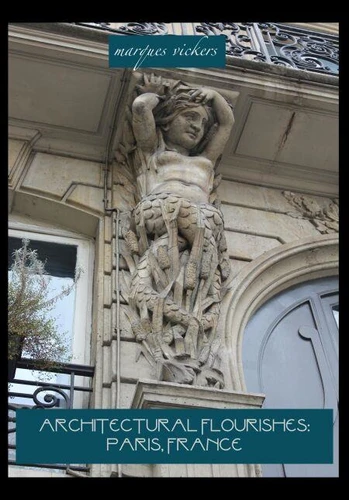
Architectural Flourishes: Paris, France
Par :Formats :
Disponible dans votre compte client Decitre ou Furet du Nord dès validation de votre commande. Le format ePub est :
- Compatible avec une lecture sur My Vivlio (smartphone, tablette, ordinateur)
- Compatible avec une lecture sur liseuses Vivlio
- Pour les liseuses autres que Vivlio, vous devez utiliser le logiciel Adobe Digital Edition. Non compatible avec la lecture sur les liseuses Kindle, Remarkable et Sony
 , qui est-ce ?
Notre partenaire de plateforme de lecture numérique où vous retrouverez l'ensemble de vos ebooks gratuitement
Pour en savoir plus sur nos ebooks, consultez notre aide en ligne ici
C'est si simple ! Lisez votre ebook avec l'app Vivlio sur votre tablette, mobile ou ordinateur :

- FormatePub
- ISBN8215423462
- EAN9798215423462
- Date de parution15/03/2023
- Protection num.pas de protection
- Infos supplémentairesepub
- ÉditeurWMG Publishing
Résumé
"Architectural Flourishes: Paris France" is a pictorial guide illustrating the features, ornamentation and detailing that capture Paris' mid to late 19th century architectural legacy. The majority of images may be traced to the ambitious reign of Napoleon III's Second Republic and his appointed Prefect of the Seine Department, George-Eugene Haussmann. Commonly known as Baron Haussmann, he was directed in 1853 to orchestrate the modernization and transformation of Paris.
He created that transformation by installing wider boulevards, parks, public works and creating a fertile environment for redevelopment. His office targeted the eradication of unsightly slums along with cramped and constricted commercial districts. His program obliterated significant traces of Paris' medieval history. Approximately 350.000 people would be displaced over the sixteen-year duration of his crusade.
Nine months before Napoleon III's government collapsed, he was unceremoniously dismissed from office. The photographic imagery of this edition focuses on the architectural styling and exterior moldings prevalent during that era. The text details the accompanying history of the Haussmann era architecture and its two design successors. Haussmann styling would be supplanted initially by the Art Nouveau movement.
Promoted during the Belle Époque period, the style was introduced during 1890 spreading afterwards throughout Europe. It receded in popularity upon the beginning of World War I. Art Deco architecture coincided with the fading of Art Nouveau's influence beginning in 1910. Its was elevated into prominence at the International Exposition of Modern Decorative and Industrial Arts exhibition held in Paris during 1925.
It remained a dominant style until 1939 and the global aggression inflicted by World War II. Paris features few reminders of the ancient settlement of Lutetia formed by a Celtic tribe known as the Parisii in the 3rd century BC. The Romans captured the community in 52 BC and converted it into a Gallo-Roman garrison. The community was rebuilt in the 1st century AD employing a traditional Roman style layout.
The core of the settlement was the Ile de la Cite, the current location of Notre Dame Cathedral and the Palais de Justice. The city showcases scattered remnants from the Medieval and Renaissance eras. Most are ecclesiastical in context. They appear dwarfed by contemporary and statuesque Haussmann inspired constructions and facades. Haussmann's designs elevated Paris into one of the most beautiful international cities.
The architectural detailing photographed is a reminder that classic elemental design never ultimately goes out of fashion.
He created that transformation by installing wider boulevards, parks, public works and creating a fertile environment for redevelopment. His office targeted the eradication of unsightly slums along with cramped and constricted commercial districts. His program obliterated significant traces of Paris' medieval history. Approximately 350.000 people would be displaced over the sixteen-year duration of his crusade.
Nine months before Napoleon III's government collapsed, he was unceremoniously dismissed from office. The photographic imagery of this edition focuses on the architectural styling and exterior moldings prevalent during that era. The text details the accompanying history of the Haussmann era architecture and its two design successors. Haussmann styling would be supplanted initially by the Art Nouveau movement.
Promoted during the Belle Époque period, the style was introduced during 1890 spreading afterwards throughout Europe. It receded in popularity upon the beginning of World War I. Art Deco architecture coincided with the fading of Art Nouveau's influence beginning in 1910. Its was elevated into prominence at the International Exposition of Modern Decorative and Industrial Arts exhibition held in Paris during 1925.
It remained a dominant style until 1939 and the global aggression inflicted by World War II. Paris features few reminders of the ancient settlement of Lutetia formed by a Celtic tribe known as the Parisii in the 3rd century BC. The Romans captured the community in 52 BC and converted it into a Gallo-Roman garrison. The community was rebuilt in the 1st century AD employing a traditional Roman style layout.
The core of the settlement was the Ile de la Cite, the current location of Notre Dame Cathedral and the Palais de Justice. The city showcases scattered remnants from the Medieval and Renaissance eras. Most are ecclesiastical in context. They appear dwarfed by contemporary and statuesque Haussmann inspired constructions and facades. Haussmann's designs elevated Paris into one of the most beautiful international cities.
The architectural detailing photographed is a reminder that classic elemental design never ultimately goes out of fashion.
A propos de Marques Vickers
5,49 €
5,49 €



5,99 €


5,99 €

