
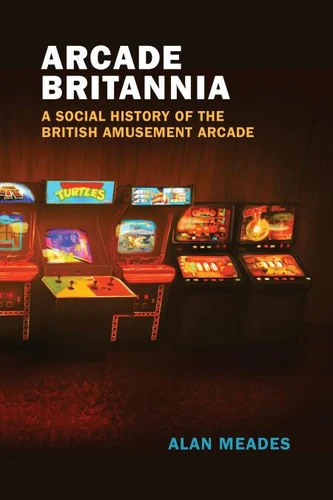
Arcade Britannia. A Social History of the British Amusement Arcade
Par :Formats :
Disponible dans votre compte client Decitre ou Furet du Nord dès validation de votre commande. Le format ePub protégé est :
- Compatible avec une lecture sur My Vivlio (smartphone, tablette, ordinateur)
- Compatible avec une lecture sur liseuses Vivlio
- Pour les liseuses autres que Vivlio, vous devez utiliser le logiciel Adobe Digital Edition. Non compatible avec la lecture sur les liseuses Kindle, Remarkable et Sony
- Non compatible avec un achat hors France métropolitaine
 , qui est-ce ?
Notre partenaire de plateforme de lecture numérique où vous retrouverez l'ensemble de vos ebooks gratuitement
Pour en savoir plus sur nos ebooks, consultez notre aide en ligne ici
C'est si simple ! Lisez votre ebook avec l'app Vivlio sur votre tablette, mobile ou ordinateur :

- Nombre de pages336
- FormatePub
- ISBN978-0-262-37235-0
- EAN9780262372350
- Date de parution25/10/2022
- Protection num.Adobe DRM
- Taille67 Mo
- Infos supplémentairesepub
- ÉditeurThe MIT Press
Résumé
Discover the rich, little-known history of the British amusement arcade from the 1800s to the present-with insights from industry professionals, plus rare archival photos! Amusement arcades are an important part of British culture, yet discussions of them tend to be based on American models. Alan Meades, who spent his childhood happily playing in British seaside arcades, presents the history of the arcade from its origins in traveling fairs of the 1800s to the present.
Drawing on firsthand accounts of industry members and archival sources, including rare photographs and trade publications, he tells the story of the first arcades, the people who made the machines, the rise of video games, and the legislative and economic challenges spurred by public fears of moral decline. Arcade Britannia highlights the differences between British and North American arcades, especially in terms of the complex relationship between gambling and amusements.
He also underlines Britain's role in introducing coin-operated technologies into Europe, as well as the industry's close links to America and, especially, Japan. He shows how the British arcade is a product of centuries of public play, gambling, entrepreneurship, and mechanization. Examining the arcade's history through technological, social, cultural, biographic, and legislative perspectives, he describes a pendulum shift between control and liberalization, as well as the continued efforts of concerned moralists to limit and regulate public play.
Finally, he recounts the impact on the industry of legislative challenges that included vicious taxation, questions of whether copyright law applied to video-game code, and the peculiar moment when every arcade game in Britain was considered a cinema.
Drawing on firsthand accounts of industry members and archival sources, including rare photographs and trade publications, he tells the story of the first arcades, the people who made the machines, the rise of video games, and the legislative and economic challenges spurred by public fears of moral decline. Arcade Britannia highlights the differences between British and North American arcades, especially in terms of the complex relationship between gambling and amusements.
He also underlines Britain's role in introducing coin-operated technologies into Europe, as well as the industry's close links to America and, especially, Japan. He shows how the British arcade is a product of centuries of public play, gambling, entrepreneurship, and mechanization. Examining the arcade's history through technological, social, cultural, biographic, and legislative perspectives, he describes a pendulum shift between control and liberalization, as well as the continued efforts of concerned moralists to limit and regulate public play.
Finally, he recounts the impact on the industry of legislative challenges that included vicious taxation, questions of whether copyright law applied to video-game code, and the peculiar moment when every arcade game in Britain was considered a cinema.