
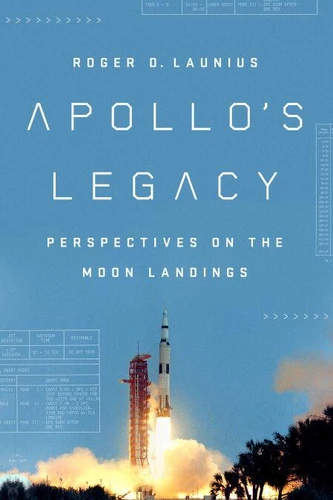
Apollo's Legacy. Perspectives on the Moon Landings
Par :Formats :
Disponible dans votre compte client Decitre ou Furet du Nord dès validation de votre commande. Le format ePub protégé est :
- Compatible avec une lecture sur My Vivlio (smartphone, tablette, ordinateur)
- Compatible avec une lecture sur liseuses Vivlio
- Pour les liseuses autres que Vivlio, vous devez utiliser le logiciel Adobe Digital Edition. Non compatible avec la lecture sur les liseuses Kindle, Remarkable et Sony
- Non compatible avec un achat hors France métropolitaine
 , qui est-ce ?
Notre partenaire de plateforme de lecture numérique où vous retrouverez l'ensemble de vos ebooks gratuitement
Pour en savoir plus sur nos ebooks, consultez notre aide en ligne ici
C'est si simple ! Lisez votre ebook avec l'app Vivlio sur votre tablette, mobile ou ordinateur :

- Nombre de pages264
- FormatePub
- ISBN978-1-58834-652-0
- EAN9781588346520
- Date de parution14/05/2019
- Protection num.Adobe DRM
- Taille18 Mo
- Infos supplémentairesepub
- ÉditeurSmithsonian Books
Résumé
An all-encompassing look at the history and enduring impact of the Apollo space programIn Apollo's Legacy, space historian Roger D. Launius explores the many-faceted stories told about the meaning of the Apollo program and how it forever altered American society. The Apollo missions marked the first time human beings left Earth's orbit and visited another world, and thus they loom large in our collective memory.
Many have detailed the exciting events of the Apollo program, but Launius offers unique insight into its legacy as seen through multiple perspectives. He surveys a wide range of viewpoints and narratives, both positive and negative, surrounding the program. These include the argument that Apollo epitomizes American technological--and political--progress; technological and scientific advances garnered from the program; critiques from both sides of the political spectrum about the program's expenses; and even conspiracy theories and denials of the program's very existence.
Throughout the book, Launius weaves in stories from important moments in Apollo's history to draw readers into his analysis. Apollo's Legacy is a must-read for space buffs interested in new angles on a beloved cultural moment and those seeking a historic perspective on the Apollo program.
Many have detailed the exciting events of the Apollo program, but Launius offers unique insight into its legacy as seen through multiple perspectives. He surveys a wide range of viewpoints and narratives, both positive and negative, surrounding the program. These include the argument that Apollo epitomizes American technological--and political--progress; technological and scientific advances garnered from the program; critiques from both sides of the political spectrum about the program's expenses; and even conspiracy theories and denials of the program's very existence.
Throughout the book, Launius weaves in stories from important moments in Apollo's history to draw readers into his analysis. Apollo's Legacy is a must-read for space buffs interested in new angles on a beloved cultural moment and those seeking a historic perspective on the Apollo program.