
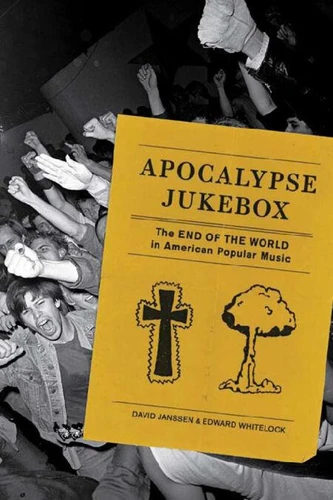
Apocalypse Jukebox. The End of the World in American Popular Music
Par : ,Formats :
Disponible dans votre compte client Decitre ou Furet du Nord dès validation de votre commande. Le format ePub protégé est :
- Compatible avec une lecture sur My Vivlio (smartphone, tablette, ordinateur)
- Compatible avec une lecture sur liseuses Vivlio
- Pour les liseuses autres que Vivlio, vous devez utiliser le logiciel Adobe Digital Edition. Non compatible avec la lecture sur les liseuses Kindle, Remarkable et Sony
- Non compatible avec un achat hors France métropolitaine
 , qui est-ce ?
Notre partenaire de plateforme de lecture numérique où vous retrouverez l'ensemble de vos ebooks gratuitement
Pour en savoir plus sur nos ebooks, consultez notre aide en ligne ici
C'est si simple ! Lisez votre ebook avec l'app Vivlio sur votre tablette, mobile ou ordinateur :

- Nombre de pages256
- FormatePub
- ISBN978-1-59376-336-7
- EAN9781593763367
- Date de parution23/12/2008
- Protection num.Adobe DRM
- Taille1 Mo
- Infos supplémentairesepub
- ÉditeurSoft Skull
Résumé
From its indefinite beginnings through its broad commercialization and endless reinterpretation, American rock-and-roll music has been preoccupied with an end-of-the-world mentality that extends through the whole of American popular music. In Apocalypse Jukebox, Edward Whitelock and David Janssen trace these connections through American music genres, uncovering a mix of paranoia and hope that characterizes so much of the nation's history.
From the book's opening scene, set in the American South during a terrifying 1833 meteor shower, the sense of doom is both palpable and inescapable; a deep foreboding that shadows every subsequent development in American popular music and, as Whitelock and Janssen contend, stands as a key to understanding and explicating America itself. Whitelock and Janssen examine the diversity of apocalyptic influences within North American recorded music, focusing in particular upon a number of influential performers, including Bob Dylan, Leonard Cohen, John Coltrane, Devo, R.
E. M., Sleater-Kinney, and Green Day. In Apocalypse Jukebox, Whitelock and Janssen reveal apocalypse as a permanent and central part of the American character while establishing rock-and-roll as a true reflection of that character.
From the book's opening scene, set in the American South during a terrifying 1833 meteor shower, the sense of doom is both palpable and inescapable; a deep foreboding that shadows every subsequent development in American popular music and, as Whitelock and Janssen contend, stands as a key to understanding and explicating America itself. Whitelock and Janssen examine the diversity of apocalyptic influences within North American recorded music, focusing in particular upon a number of influential performers, including Bob Dylan, Leonard Cohen, John Coltrane, Devo, R.
E. M., Sleater-Kinney, and Green Day. In Apocalypse Jukebox, Whitelock and Janssen reveal apocalypse as a permanent and central part of the American character while establishing rock-and-roll as a true reflection of that character.