
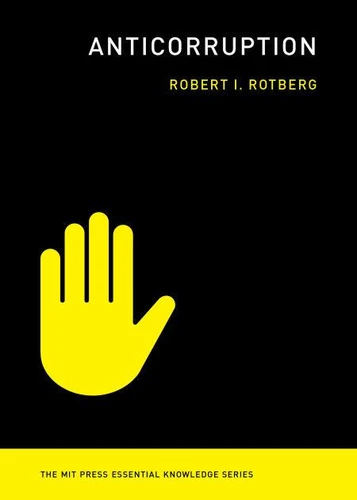
Anticorruption
Par :Formats :
Disponible dans votre compte client Decitre ou Furet du Nord dès validation de votre commande. Le format ePub protégé est :
- Compatible avec une lecture sur My Vivlio (smartphone, tablette, ordinateur)
- Compatible avec une lecture sur liseuses Vivlio
- Pour les liseuses autres que Vivlio, vous devez utiliser le logiciel Adobe Digital Edition. Non compatible avec la lecture sur les liseuses Kindle, Remarkable et Sony
- Non compatible avec un achat hors France métropolitaine
 , qui est-ce ?
Notre partenaire de plateforme de lecture numérique où vous retrouverez l'ensemble de vos ebooks gratuitement
Pour en savoir plus sur nos ebooks, consultez notre aide en ligne ici
C'est si simple ! Lisez votre ebook avec l'app Vivlio sur votre tablette, mobile ou ordinateur :

- Nombre de pages272
- FormatePub
- ISBN978-0-262-35843-9
- EAN9780262358439
- Date de parution21/07/2020
- Protection num.Adobe DRM
- Taille244 Ko
- Infos supplémentairesepub
- ÉditeurThe MIT Press
Résumé
President Emeritus of the World Peace Foundation and Fellow of the American Academy of Arts and Sciences, Robert I. Rotberg, showcases how to win the ever-raging anticorruption battle, through this guide for citizens and politicians on either side of the aisle. The phenomenon of corruption has existed since antiquity; from ancient Mesopotamia to our modern-day high-level ethical morass, people have sought a leg up, a shortcut, or an end run to power and influence.
In this volume in the MIT Press Essential Knowledge series, Robert Rotberg, a recognized authority on governance and international relations, offers a definitive guide to corruption and anticorruption, charting the evolution of corruption and offering recommendations on how to reduce its power and spread. The most important component of anticorruption efforts, he argues, is leadership that is committed to changing dominant political cultures.
In this volume in the MIT Press Essential Knowledge series, Robert Rotberg, a recognized authority on governance and international relations, offers a definitive guide to corruption and anticorruption, charting the evolution of corruption and offering recommendations on how to reduce its power and spread. The most important component of anticorruption efforts, he argues, is leadership that is committed to changing dominant political cultures.