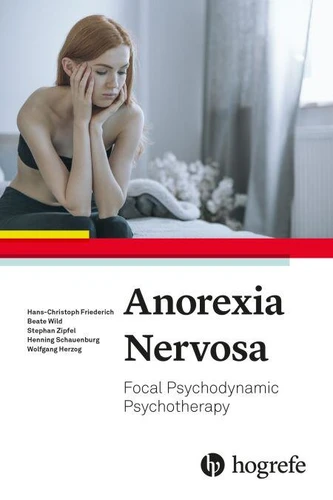
Anorexia Nervosa. Focal Psychodynamic Psychotherapy
Par : , , , ,Formats :
Disponible dans votre compte client Decitre ou Furet du Nord dès validation de votre commande. Le format ePub est :
- Compatible avec une lecture sur My Vivlio (smartphone, tablette, ordinateur)
- Compatible avec une lecture sur liseuses Vivlio
- Pour les liseuses autres que Vivlio, vous devez utiliser le logiciel Adobe Digital Edition. Non compatible avec la lecture sur les liseuses Kindle, Remarkable et Sony
 , qui est-ce ?
Notre partenaire de plateforme de lecture numérique où vous retrouverez l'ensemble de vos ebooks gratuitement
Pour en savoir plus sur nos ebooks, consultez notre aide en ligne ici
C'est si simple ! Lisez votre ebook avec l'app Vivlio sur votre tablette, mobile ou ordinateur :

- Nombre de pages124
- FormatePub
- ISBN978-1-61334-554-2
- EAN9781613345542
- Date de parution23/01/2019
- Protection num.Digital Watermarking
- Taille2 Mo
- Infos supplémentairesepub
- ÉditeurHogrefe Publishing
Résumé
This manual presents an evidence-based focal psychodynamic approach for the outpatient treatment of adults with anorexia nervosa, which has been shown to produce lasting changes for patients.
The reader first gains a thorough understanding of the general models and theories of anorexia nervosa. The book then describes in detail a three-phase treatment using focal psychodynamic psychotherapy. It provides extensive hands-on tips, including precise assessment of psychodynamic themes and structures using the Operationalized Psychodynamic Diagnosis (OPD) system, real-life case studies, and clinical pearls.
Clinicians also learn how to identify and treat typical ego structural deficits in the areas of affect experience and differentiation, impulse control, self-worth regulation, and body perception. Detailed case vignettes provide deepened insight into the therapeutic process. A final chapter explores the extensive empirical studies on which this manual is based, in particular the renowned multicenter ANTOP study.
Printable tools in the appendices can be used in daily practice. This book is of interest to clinical psychologists, psychotherapists, psychiatrists, counselors, and students.
Clinicians also learn how to identify and treat typical ego structural deficits in the areas of affect experience and differentiation, impulse control, self-worth regulation, and body perception. Detailed case vignettes provide deepened insight into the therapeutic process. A final chapter explores the extensive empirical studies on which this manual is based, in particular the renowned multicenter ANTOP study.
Printable tools in the appendices can be used in daily practice. This book is of interest to clinical psychologists, psychotherapists, psychiatrists, counselors, and students.