SOLDES
Jusqu'à -70% sur une sélection d'articles*

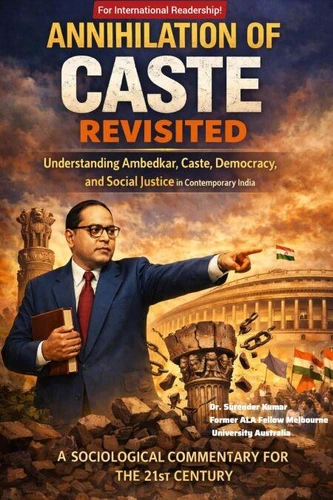
Annihilation of Caste Revisited: A Sociological Commentary for the 21st Century
Par :Formats :
Disponible dans votre compte client Decitre ou Furet du Nord dès validation de votre commande. Le format ePub est :
- Compatible avec une lecture sur My Vivlio (smartphone, tablette, ordinateur)
- Compatible avec une lecture sur liseuses Vivlio
- Pour les liseuses autres que Vivlio, vous devez utiliser le logiciel Adobe Digital Edition. Non compatible avec la lecture sur les liseuses Kindle, Remarkable et Sony
 , qui est-ce ?
Notre partenaire de plateforme de lecture numérique où vous retrouverez l'ensemble de vos ebooks gratuitement
Pour en savoir plus sur nos ebooks, consultez notre aide en ligne ici
C'est si simple ! Lisez votre ebook avec l'app Vivlio sur votre tablette, mobile ou ordinateur :

- FormatePub
- ISBN8224540433
- EAN9798224540433
- Date de parution09/03/2026
- Protection num.pas de protection
- Infos supplémentairesepub
- ÉditeurDraft2Digital
Résumé
This book offers a critical examination of the caste system and its enduring influence on social, political, and cultural life in India. Drawing inspiration from the writings of B. R. Ambedkar, the book explores the historical origins of caste, the mechanisms through which it reproduces inequality, and the challenges involved in dismantling deeply entrenched social hierarchies. Through an interdisciplinary approach that combines sociology, history, and political theory, the book analyzes how caste continues to shape access to education, economic opportunities, and political power.
It examines the persistence of caste endogamy, social exclusion, and structural discrimination while also highlighting the transformative role of constitutional values such as liberty, equality, and fraternity. The book also investigates contemporary developments in caste politics, including the rise of Dalit movements, the role of democratic institutions, and the impact of digital media on social mobilization.
Social media platforms have created new spaces for both the reproduction of caste identities and the emergence of powerful anti-caste activism. Ultimately, this work reflects on whether the annihilation of caste remains possible in the twenty-first century. By revisiting Ambedkar's vision of social democracy, the book argues that meaningful change requires not only legal reform but also a profound transformation of social attitudes, economic structures, and cultural practices.
This book is intended for students, scholars, and general readers interested in caste, social justice, political thought, and modern Indian society.
It examines the persistence of caste endogamy, social exclusion, and structural discrimination while also highlighting the transformative role of constitutional values such as liberty, equality, and fraternity. The book also investigates contemporary developments in caste politics, including the rise of Dalit movements, the role of democratic institutions, and the impact of digital media on social mobilization.
Social media platforms have created new spaces for both the reproduction of caste identities and the emergence of powerful anti-caste activism. Ultimately, this work reflects on whether the annihilation of caste remains possible in the twenty-first century. By revisiting Ambedkar's vision of social democracy, the book argues that meaningful change requires not only legal reform but also a profound transformation of social attitudes, economic structures, and cultural practices.
This book is intended for students, scholars, and general readers interested in caste, social justice, political thought, and modern Indian society.


