
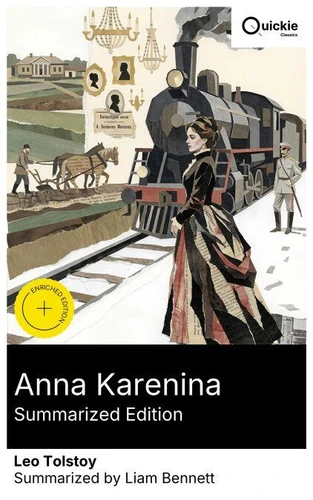
Anna Karenina (Summarized Edition). Enriched edition. Psychological realism of love, faith, and status in post-Emancipation Russia: railways, salons, courts, and fields (Maude-annotated translation)
Par : ,Formats :
Disponible dans votre compte client Decitre ou Furet du Nord dès validation de votre commande. Le format ePub est :
- Compatible avec une lecture sur My Vivlio (smartphone, tablette, ordinateur)
- Compatible avec une lecture sur liseuses Vivlio
- Pour les liseuses autres que Vivlio, vous devez utiliser le logiciel Adobe Digital Edition. Non compatible avec la lecture sur les liseuses Kindle, Remarkable et Sony
 , qui est-ce ?
Notre partenaire de plateforme de lecture numérique où vous retrouverez l'ensemble de vos ebooks gratuitement
Pour en savoir plus sur nos ebooks, consultez notre aide en ligne ici
C'est si simple ! Lisez votre ebook avec l'app Vivlio sur votre tablette, mobile ou ordinateur :

- Nombre de pages264
- FormatePub
- ISBN859-65--4787698-4
- EAN8596547876984
- Date de parution10/01/2026
- Protection num.Digital Watermarking
- Taille862 Ko
- Infos supplémentairesepub
- ÉditeurQUICKIE CLASSICS
Résumé
First serialized in The Russian Messenger (1875-77), Anna Karenina entwines Anna's fatal affair with Vronsky and Levin's countervailing search for ethical life, opposing metropolitan spectacle to agrarian labor in post-Emancipation Russia. With omniscient, psychologically exact realism and free indirect discourse, Tolstoy anatomizes marriage, faith, and status; railways, salons, courts, and fields become motifs through which modernity unsettles inherited codes.
An aristocratic landowner at Yasnaya Polyana, Tolstoy drew on diaries, peasant schooling experiments, and stern self-scrutiny. Disillusionment with Petersburg society and the law, together with a marriage that sharpened his interest in family ethics, inform Levin's quasi-autobiographical arc, while the novel's juridical scenes, ecclesial debates, and railway sublime echo his Crimean War memories and fascination with industrial change.
Rendered in the Annotated Maude Translation, by Aylmer and Louise Maude, Tolstoy's authorized translators, this edition couples lucid, faithful prose with notes on ranks, calendars, idioms, and social ritual, easing Russian names and contexts. It suits students and scholars alike, preserving tonal nuance while clarifying culture. For readers of serious realism, it is essential. Quickie Classics summarizes timeless works with precision, preserving the author's voice and keeping the prose clear, fast, and readable-distilled, never diluted.
Enriched Edition extras: Introduction · Synopsis · Historical Context · Author Biography · Brief Analysis · 4 Reflection Q&As · Editorial Footnotes.
An aristocratic landowner at Yasnaya Polyana, Tolstoy drew on diaries, peasant schooling experiments, and stern self-scrutiny. Disillusionment with Petersburg society and the law, together with a marriage that sharpened his interest in family ethics, inform Levin's quasi-autobiographical arc, while the novel's juridical scenes, ecclesial debates, and railway sublime echo his Crimean War memories and fascination with industrial change.
Rendered in the Annotated Maude Translation, by Aylmer and Louise Maude, Tolstoy's authorized translators, this edition couples lucid, faithful prose with notes on ranks, calendars, idioms, and social ritual, easing Russian names and contexts. It suits students and scholars alike, preserving tonal nuance while clarifying culture. For readers of serious realism, it is essential. Quickie Classics summarizes timeless works with precision, preserving the author's voice and keeping the prose clear, fast, and readable-distilled, never diluted.
Enriched Edition extras: Introduction · Synopsis · Historical Context · Author Biography · Brief Analysis · 4 Reflection Q&As · Editorial Footnotes.
A propos de Leo Tolstoy
Childhood
E-book
2,99 €
0,99 €

1,99 €

War and Peace
E-book
0,99 €

What Is Art?
E-book
0,49 €

Resurrection
E-book
0,49 €

Hadji Murat
E-book
0,49 €

Youth
E-book
0,49 €
The Kreutzer Sonata
E-book
0,49 €
Boyhood
E-book
0,49 €
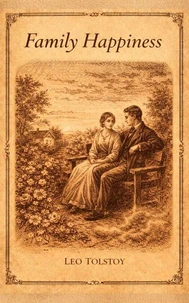
Family Happiness
E-book
0,49 €
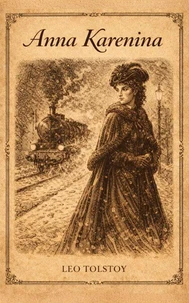
Anna Karenina
E-book
0,49 €