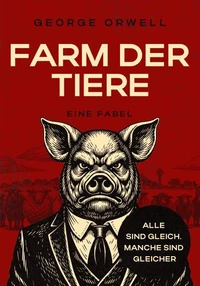
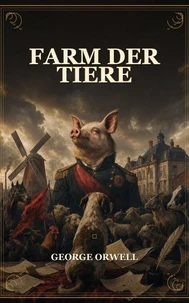
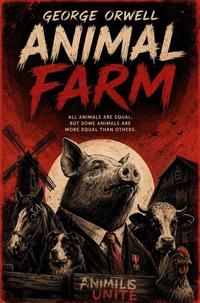
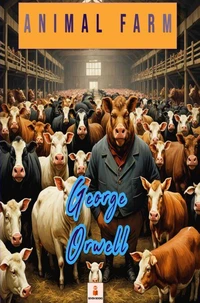
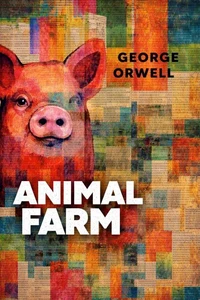
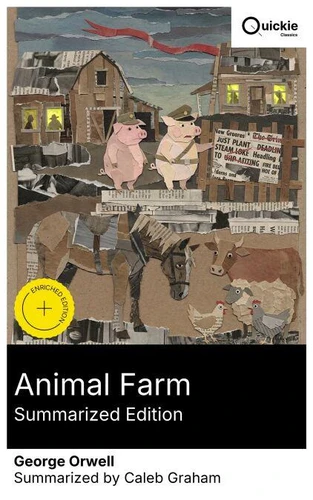
Animal Farm is a taut allegorical, satirical novella that turns the Russian Revolution and Stalinist consolidation into a barnyard fable. With lapidary prose, Swiftian irony, and Aesopian clarity, Orwell traces the animals' revolt against Mr. Jones and the pigs' gradual monopoly on power-through propaganda, commandment revisions, and staged spectacles-until liberation curdles into tyranny. Written amid 1944-45 anxieties, its spare architecture and recurring refrains forge a parable of cyclical betrayal that exceeds its Soviet referent.
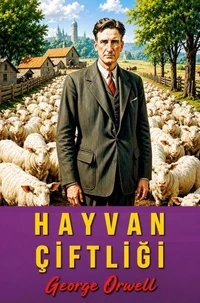
Orwell-born Eric Arthur Blair-brought hard-earned skepticism. Educated at Eton and tempered by Indian Imperial Police service, he was radicalized by poverty reportage and, crucially, by fighting with the POUM in Spain, where he witnessed repression on the left. His democratic socialism and obsession with how power degrades language coalesced here, refined by wartime journalism and a broadcaster's ear for slogans, euphemism, and the theatricality of authority.
This incisive classic merits attention from readers of literature, history, political theory, and media studies. Its brevity belies interpretive richness, inviting debate about revolution, complicity, and manufactured consent. Read it as warning, primer, and enduring moral inquiry.
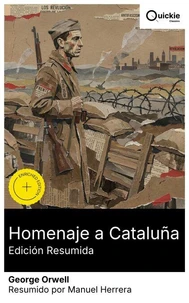
Quickie Classics summarizes timeless works with precision, preserving the author's voice and keeping the prose clear, fast, and readable-distilled, never diluted.
Enriched Edition extras: Introduction · Synopsis · Historical Context · Author Biography · Brief Analysis · 4 Reflection Q&As · Editorial Footnotes.
Animal Farm is a taut allegorical, satirical novella that turns the Russian Revolution and Stalinist consolidation into a barnyard fable. With lapidary prose, Swiftian irony, and Aesopian clarity, Orwell traces the animals' revolt against Mr. Jones and the pigs' gradual monopoly on power-through propaganda, commandment revisions, and staged spectacles-until liberation curdles into tyranny. Written amid 1944-45 anxieties, its spare architecture and recurring refrains forge a parable of cyclical betrayal that exceeds its Soviet referent.
Orwell-born Eric Arthur Blair-brought hard-earned skepticism. Educated at Eton and tempered by Indian Imperial Police service, he was radicalized by poverty reportage and, crucially, by fighting with the POUM in Spain, where he witnessed repression on the left. His democratic socialism and obsession with how power degrades language coalesced here, refined by wartime journalism and a broadcaster's ear for slogans, euphemism, and the theatricality of authority.
This incisive classic merits attention from readers of literature, history, political theory, and media studies. Its brevity belies interpretive richness, inviting debate about revolution, complicity, and manufactured consent. Read it as warning, primer, and enduring moral inquiry.
Quickie Classics summarizes timeless works with precision, preserving the author's voice and keeping the prose clear, fast, and readable-distilled, never diluted.
Enriched Edition extras: Introduction · Synopsis · Historical Context · Author Biography · Brief Analysis · 4 Reflection Q&As · Editorial Footnotes.

 , qui est-ce ?