Nouveauté
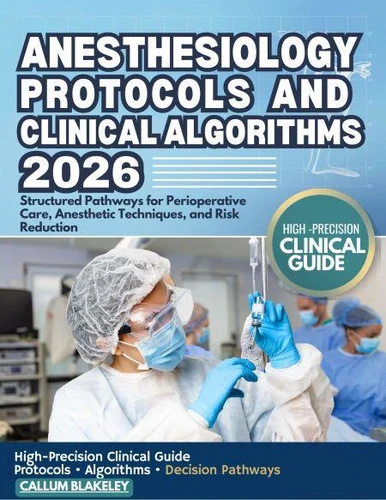
ANESTHESIOLOGY PROTOCOLS AND CLINICAL ALGORITHMS 2026. Structured Pathways for Perioperative Care, Anesthetic Techniques, and Risk Reduction
Par :Formats :
Disponible dans votre compte client Decitre ou Furet du Nord dès validation de votre commande. Le format ePub est :
- Compatible avec une lecture sur My Vivlio (smartphone, tablette, ordinateur)
- Compatible avec une lecture sur liseuses Vivlio
- Pour les liseuses autres que Vivlio, vous devez utiliser le logiciel Adobe Digital Edition. Non compatible avec la lecture sur les liseuses Kindle, Remarkable et Sony
 , qui est-ce ?
Notre partenaire de plateforme de lecture numérique où vous retrouverez l'ensemble de vos ebooks gratuitement
Pour en savoir plus sur nos ebooks, consultez notre aide en ligne ici
C'est si simple ! Lisez votre ebook avec l'app Vivlio sur votre tablette, mobile ou ordinateur :

- Nombre de pages328
- FormatePub
- ISBN8905163258
- EAN9798905163258
- Date de parution18/06/2026
- Protection num.pas de protection
- Taille758 Ko
- Infos supplémentairesepub
- ÉditeurChiify
Résumé
When the room is loud and the clock is running, you don't rise to the occasion-you fall back on your protocols.
A Focused Resource for American Board of Anesthesiology (ABA) Certification
Anesthesiology is a specialty built on preparation, precision, and systematic decision-making. The most effective clinicians do not rely on memory alone-they think in structured algorithms and evidence-based protocols that remain dependable under the pressure of real clinical emergencies.
Anesthesiology Protocols and Clinical Algorithms 2026 follows the complete perioperative journey, from preoperative assessment and intraoperative management to postoperative recovery, patient safety, subspecialty anesthesia, and crisis management. Every protocol, medication guideline, and clinical recommendation is aligned with current standards from the American Society of Anesthesiologists (ASA), American Heart Association (AHA), American Society of Regional Anesthesia and Pain Medicine (ASRA), Malignant Hyperthermia Association of the United States (MHAUS), Society for Obstetric Anesthesia and Perinatology (SOAP), and other authoritative sources. What This Book Covers Comprehensive preoperative evaluation, patient optimization, and airway assessment algorithms Anesthetic technique selection, hemodynamic management, ventilation strategies, and advanced physiologic monitoring Patient safety protocols, quality improvement initiatives, and risk management principles Specialized anesthesia protocols for cardiac, neuro, obstetric, pediatric, and ambulatory procedures Evidence-based crisis management for malignant hyperthermia, local anesthetic systemic toxicity (LAST), anaphylaxis, and other perioperative emergencies Post-Anesthesia Care Unit (PACU) management, acute pain control, Enhanced Recovery After Surgery (ERAS), and ambulatory surgery pathways Modern anesthesia technologies, education, simulation training, and contemporary clinical practice standards Each of the twenty-two chapters follows a consistent learning format featuring clearly defined objectives, structured clinical explanations, Key Point and Pitfall boxes, Clinical Correlation examples, quick-reference tables, practical diagrams, and review questions with detailed answers to reinforce knowledge and improve clinical decision-making. Who This Book Is For This guide is written for anesthesiology residents, practicing anesthesiologists, physicians preparing for ABA certification, CRNAs, medical students, and healthcare professionals seeking a comprehensive evidence-based review of modern anesthetic practice.
Whether used as a complete study resource or a rapid reference before examinations, rotations, or complex clinical cases, each chapter is designed for quick access and practical application. Read it once to establish a strong clinical foundation, then return whenever you need to reinforce essential protocols, strengthen critical thinking, and improve patient safety. The same structured approach that supports board examination success also enhances confidence in everyday anesthetic practice. Disclaimer: This publication is an independent educational study resource.
It is not affiliated with, endorsed by, or sponsored by the American Board of Anesthesiology (ABA), the American Society of Anesthesiologists (ASA), or any other certifying or professional organization.
Anesthesiology Protocols and Clinical Algorithms 2026 follows the complete perioperative journey, from preoperative assessment and intraoperative management to postoperative recovery, patient safety, subspecialty anesthesia, and crisis management. Every protocol, medication guideline, and clinical recommendation is aligned with current standards from the American Society of Anesthesiologists (ASA), American Heart Association (AHA), American Society of Regional Anesthesia and Pain Medicine (ASRA), Malignant Hyperthermia Association of the United States (MHAUS), Society for Obstetric Anesthesia and Perinatology (SOAP), and other authoritative sources. What This Book Covers Comprehensive preoperative evaluation, patient optimization, and airway assessment algorithms Anesthetic technique selection, hemodynamic management, ventilation strategies, and advanced physiologic monitoring Patient safety protocols, quality improvement initiatives, and risk management principles Specialized anesthesia protocols for cardiac, neuro, obstetric, pediatric, and ambulatory procedures Evidence-based crisis management for malignant hyperthermia, local anesthetic systemic toxicity (LAST), anaphylaxis, and other perioperative emergencies Post-Anesthesia Care Unit (PACU) management, acute pain control, Enhanced Recovery After Surgery (ERAS), and ambulatory surgery pathways Modern anesthesia technologies, education, simulation training, and contemporary clinical practice standards Each of the twenty-two chapters follows a consistent learning format featuring clearly defined objectives, structured clinical explanations, Key Point and Pitfall boxes, Clinical Correlation examples, quick-reference tables, practical diagrams, and review questions with detailed answers to reinforce knowledge and improve clinical decision-making. Who This Book Is For This guide is written for anesthesiology residents, practicing anesthesiologists, physicians preparing for ABA certification, CRNAs, medical students, and healthcare professionals seeking a comprehensive evidence-based review of modern anesthetic practice.
Whether used as a complete study resource or a rapid reference before examinations, rotations, or complex clinical cases, each chapter is designed for quick access and practical application. Read it once to establish a strong clinical foundation, then return whenever you need to reinforce essential protocols, strengthen critical thinking, and improve patient safety. The same structured approach that supports board examination success also enhances confidence in everyday anesthetic practice. Disclaimer: This publication is an independent educational study resource.
It is not affiliated with, endorsed by, or sponsored by the American Board of Anesthesiology (ABA), the American Society of Anesthesiologists (ASA), or any other certifying or professional organization.