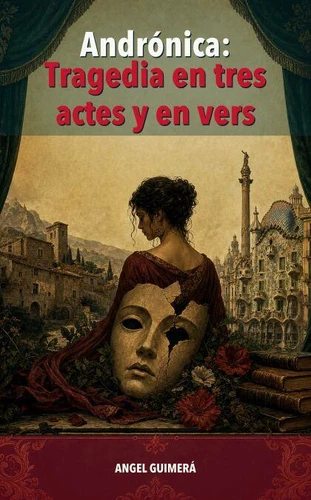
"Andrónica: Tragedia en tres actes y en vers" by Àngel Guimerà is a dramatic tragedy written in the early 20th century. The play is set in Anatolia in the year 1022 and features a range of characters including the main character, Andrónica, as well as Nicéfor, the emperor, and various nobles, priests, and soldiers. The work likely explores themes of power, betrayal, and the struggles of the people against tyranny, particularly against Nicéfor, who seems to embody oppressive rule.
The opening of the play introduces a tense political climate in Anatolia, with Nicéfor's reign being challenged amidst concerns of betrayal and the impending threat of the Byzantine army. Initial scenes depict discussions between key figures, like the Abbot of Sant Thimur and the knight Livani, as they plot to remove Nicéfor from power. As the atmosphere grows increasingly fraught, Andrónica emerges as a crucial figure who challenges the emperor's authority, passionately advocating for the people and calling out Nicéfor's shortcomings.
The dynamics among the characters hint at a brewing conflict that intertwines personal grievances with the larger struggle for freedom and justice, setting the stage for the dramatic events that are sure to unfold throughout the play. This Catalan-language digital edition is prepared with active navigation, clean typography, a custom cover and a reading file stripped of source-site notices, donation text and unnecessary external links.
"Andrónica: Tragedia en tres actes y en vers" by Àngel Guimerà is a dramatic tragedy written in the early 20th century. The play is set in Anatolia in the year 1022 and features a range of characters including the main character, Andrónica, as well as Nicéfor, the emperor, and various nobles, priests, and soldiers. The work likely explores themes of power, betrayal, and the struggles of the people against tyranny, particularly against Nicéfor, who seems to embody oppressive rule.
The opening of the play introduces a tense political climate in Anatolia, with Nicéfor's reign being challenged amidst concerns of betrayal and the impending threat of the Byzantine army. Initial scenes depict discussions between key figures, like the Abbot of Sant Thimur and the knight Livani, as they plot to remove Nicéfor from power. As the atmosphere grows increasingly fraught, Andrónica emerges as a crucial figure who challenges the emperor's authority, passionately advocating for the people and calling out Nicéfor's shortcomings.
The dynamics among the characters hint at a brewing conflict that intertwines personal grievances with the larger struggle for freedom and justice, setting the stage for the dramatic events that are sure to unfold throughout the play. This Catalan-language digital edition is prepared with active navigation, clean typography, a custom cover and a reading file stripped of source-site notices, donation text and unnecessary external links.

 , qui est-ce ?
