SOLDES
Jusqu'à -70% sur une sélection d'articles*

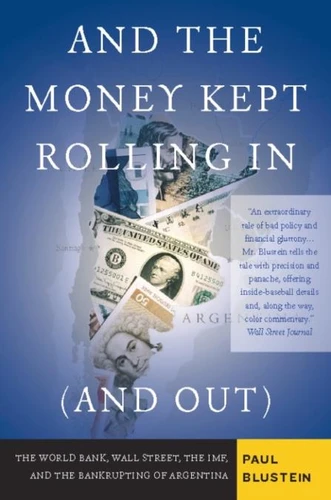
And the Money Kept Rolling In (and Out) Wall Street, the IMF, and the Bankrupting of Argentina
Par :Formats :
Disponible dans votre compte client Decitre ou Furet du Nord dès validation de votre commande. Le format ePub protégé est :
- Compatible avec une lecture sur My Vivlio (smartphone, tablette, ordinateur)
- Compatible avec une lecture sur liseuses Vivlio
- Pour les liseuses autres que Vivlio, vous devez utiliser le logiciel Adobe Digital Edition. Non compatible avec la lecture sur les liseuses Kindle, Remarkable et Sony
- Non compatible avec un achat hors France métropolitaine
 , qui est-ce ?
Notre partenaire de plateforme de lecture numérique où vous retrouverez l'ensemble de vos ebooks gratuitement
Pour en savoir plus sur nos ebooks, consultez notre aide en ligne ici
C'est si simple ! Lisez votre ebook avec l'app Vivlio sur votre tablette, mobile ou ordinateur :

- Nombre de pages304
- FormatePub
- ISBN1-58648-551-2
- EAN9781586485511
- Date de parution03/04/2006
- Protection num.Adobe DRM
- Infos supplémentairesepub
- ÉditeurPublicAffairs
Résumé
In the 1990s, few countries were more lionized than Argentina for its efforts to join the club of wealthy nations. Argentina's policies drew enthusiastic applause from the IMF, the World Bank and Wall Street. But the club has a disturbing propensity to turn its back on arrivistes and cast them out. That was what happened in 2001, when Argentina suffered one of the most spectacular crashes in modern history.
With it came appalling social and political chaos, a collapse of the peso, and a wrenching downturn that threw millions into poverty and left nearly one-quarter of the workforce unemployed. Paul Blustein, whose book about the IMF, The Chastening, was called "gripping, often frightening" by The Economist and lauded by the Wall Street Journal as "a superbly reported and skillfully woven story, " now gets right inside Argentina's rise and fall in a dramatic account based on hundreds of interviews with top policymakers and financial market players as well as reams of internal documents.
He shows how the IMF turned a blind eye to the vulnerabilities of its star pupil, and exposes the conduct of global financial market players in Argentina as redolent of the scandals -- like those at Enron, WorldCom and Global Crossing -- that rocked Wall Street in recent years. By going behind the scenes of Argentina's debacle, Blustein shows with unmistakable clarity how sadly elusive the path of hope and progress remains to the great bulk of humanity still mired in poverty and underdevelopment.
With it came appalling social and political chaos, a collapse of the peso, and a wrenching downturn that threw millions into poverty and left nearly one-quarter of the workforce unemployed. Paul Blustein, whose book about the IMF, The Chastening, was called "gripping, often frightening" by The Economist and lauded by the Wall Street Journal as "a superbly reported and skillfully woven story, " now gets right inside Argentina's rise and fall in a dramatic account based on hundreds of interviews with top policymakers and financial market players as well as reams of internal documents.
He shows how the IMF turned a blind eye to the vulnerabilities of its star pupil, and exposes the conduct of global financial market players in Argentina as redolent of the scandals -- like those at Enron, WorldCom and Global Crossing -- that rocked Wall Street in recent years. By going behind the scenes of Argentina's debacle, Blustein shows with unmistakable clarity how sadly elusive the path of hope and progress remains to the great bulk of humanity still mired in poverty and underdevelopment.