SOLDES
Jusqu'à -70% sur une sélection d'articles*

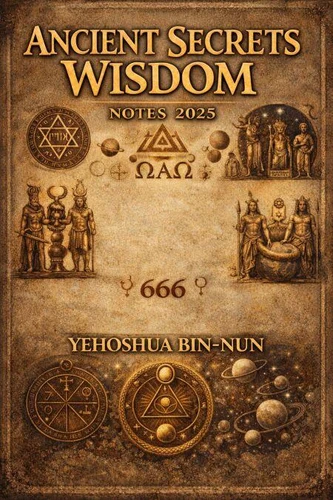
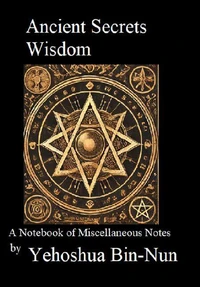
Ancient Secrets Wisdom: Notes 2025
Par :Formats :
Disponible dans votre compte client Decitre ou Furet du Nord dès validation de votre commande. Le format ePub est :
- Compatible avec une lecture sur My Vivlio (smartphone, tablette, ordinateur)
- Compatible avec une lecture sur liseuses Vivlio
- Pour les liseuses autres que Vivlio, vous devez utiliser le logiciel Adobe Digital Edition. Non compatible avec la lecture sur les liseuses Kindle, Remarkable et Sony
 , qui est-ce ?
Notre partenaire de plateforme de lecture numérique où vous retrouverez l'ensemble de vos ebooks gratuitement
Pour en savoir plus sur nos ebooks, consultez notre aide en ligne ici
C'est si simple ! Lisez votre ebook avec l'app Vivlio sur votre tablette, mobile ou ordinateur :

- FormatePub
- ISBN8235947665
- EAN9798235947665
- Date de parution30/12/2025
- Protection num.pas de protection
- Infos supplémentairesepub
- ÉditeurIoakim Ioakim
Résumé
ABOUT THE BOOKThis book has an absolute lack of literary and academic value but it can be a diamond for those who want to know as much as the book author Juan Quinonez Alban in what syncretism regards. This work is a notebook of notes, ideas, and loose observations rather than a formal or systematic study. It gathers reflections on ancient messianism and early Christological concepts as they appear in the Septuagint, Enochic literature, and the New Testament, with particular attention to the term ??????? (Christós) and its semantic and symbolic usage across these traditions.
The notebook is rooted in philological and etymological inquiry across Hebrew, Aramaic, Greek, Coptic, and Latin sources. Words, names, and concepts are approached through linguistic associations and textual echoes, occasionally referencing scholarly material explicitly cited in the notes, including Iablonski, without attempting to construct a closed academic argument. Alongside these linguistic observations, the book assembles material drawn from apocryphal and gnostic traditions associated with figures such as Enoch, Abgar, Heracleon, and the Demiurge, as well as comparative mythological notes involving Baal/Melkart, the Cabiri, Menthu-Ares, and Vulcan-Hephaestus.
Cosmological symbolism-triadic structures, the monad, planetary schemes, and numerological associations such as gematria and 666-appears interwoven with personal annotations, forming an open-ended syncretic notebook rather than a finished doctrinal or literary work.
The notebook is rooted in philological and etymological inquiry across Hebrew, Aramaic, Greek, Coptic, and Latin sources. Words, names, and concepts are approached through linguistic associations and textual echoes, occasionally referencing scholarly material explicitly cited in the notes, including Iablonski, without attempting to construct a closed academic argument. Alongside these linguistic observations, the book assembles material drawn from apocryphal and gnostic traditions associated with figures such as Enoch, Abgar, Heracleon, and the Demiurge, as well as comparative mythological notes involving Baal/Melkart, the Cabiri, Menthu-Ares, and Vulcan-Hephaestus.
Cosmological symbolism-triadic structures, the monad, planetary schemes, and numerological associations such as gematria and 666-appears interwoven with personal annotations, forming an open-ended syncretic notebook rather than a finished doctrinal or literary work.