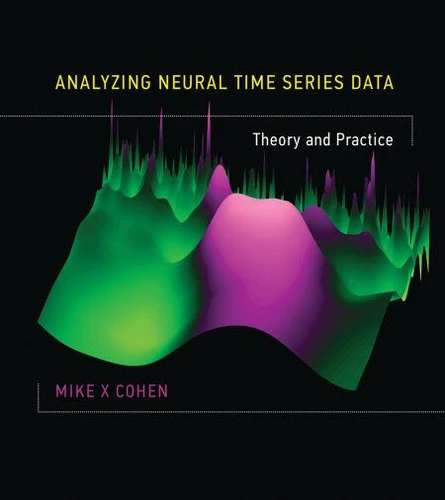
A comprehensive guide to the conceptual, mathematical, and implementational aspects of analyzing electrical brain signals, including data from MEG, EEG, and LFP recordings. This book offers a comprehensive guide to the theory and practice of analyzing electrical brain signals. It explains the conceptual, mathematical, and implementational (via Matlab programming) aspects of time-, time-frequency- and synchronization-based analyses of magnetoencephalography (MEG), electroencephalography (EEG), and local field potential (LFP) recordings from humans and nonhuman animals.
It is the only book on the topic that covers both the theoretical background and the implementation in language that can be understood by readers without extensive formal training in mathematics, including cognitive scientists, neuroscientists, and psychologists. Readers who go through the book chapter by chapter and implement the examples in Matlab will develop an understanding of why and how analyses are performed, how to interpret results, what the methodological issues are, and how to perform single-subject-level and group-level analyses.
Researchers who are familiar with using automated programs to perform advanced analyses will learn what happens when they click the "analyze now" button. The book provides sample data and downloadable Matlab code. Each of the 38 chapters covers one analysis topic, and these topics progress from simple to advanced. Most chapters conclude with exercises that further develop the material covered in the chapter.
Many of the methods presented (including convolution, the Fourier transform, and Euler's formula) are fundamental and form the groundwork for other advanced data analysis methods. Readers who master the methods in the book will be well prepared to learn other approaches.
A comprehensive guide to the conceptual, mathematical, and implementational aspects of analyzing electrical brain signals, including data from MEG, EEG, and LFP recordings. This book offers a comprehensive guide to the theory and practice of analyzing electrical brain signals. It explains the conceptual, mathematical, and implementational (via Matlab programming) aspects of time-, time-frequency- and synchronization-based analyses of magnetoencephalography (MEG), electroencephalography (EEG), and local field potential (LFP) recordings from humans and nonhuman animals.
It is the only book on the topic that covers both the theoretical background and the implementation in language that can be understood by readers without extensive formal training in mathematics, including cognitive scientists, neuroscientists, and psychologists. Readers who go through the book chapter by chapter and implement the examples in Matlab will develop an understanding of why and how analyses are performed, how to interpret results, what the methodological issues are, and how to perform single-subject-level and group-level analyses.
Researchers who are familiar with using automated programs to perform advanced analyses will learn what happens when they click the "analyze now" button. The book provides sample data and downloadable Matlab code. Each of the 38 chapters covers one analysis topic, and these topics progress from simple to advanced. Most chapters conclude with exercises that further develop the material covered in the chapter.
Many of the methods presented (including convolution, the Fourier transform, and Euler's formula) are fundamental and form the groundwork for other advanced data analysis methods. Readers who master the methods in the book will be well prepared to learn other approaches.

 , qui est-ce ?
