
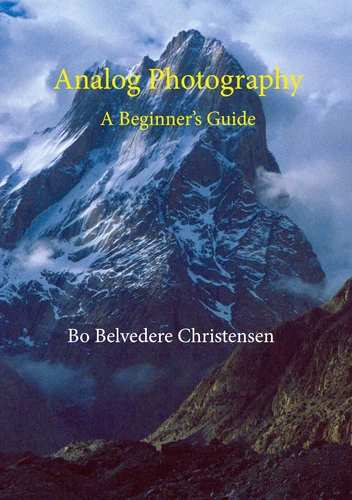
Analog Photography. A Beginner's Guide
Par :Formats :
Disponible dans votre compte client Decitre ou Furet du Nord dès validation de votre commande. Le format ePub est :
- Compatible avec une lecture sur My Vivlio (smartphone, tablette, ordinateur)
- Compatible avec une lecture sur liseuses Vivlio
- Pour les liseuses autres que Vivlio, vous devez utiliser le logiciel Adobe Digital Edition. Non compatible avec la lecture sur les liseuses Kindle, Remarkable et Sony
 , qui est-ce ?
Notre partenaire de plateforme de lecture numérique où vous retrouverez l'ensemble de vos ebooks gratuitement
Pour en savoir plus sur nos ebooks, consultez notre aide en ligne ici
C'est si simple ! Lisez votre ebook avec l'app Vivlio sur votre tablette, mobile ou ordinateur :

- Nombre de pages88
- FormatePub
- ISBN978-87-430-2096-7
- EAN9788743020967
- Date de parution07/04/2022
- Protection num.Digital Watermarking
- Taille12 Mo
- Infos supplémentairesepub
- ÉditeurBooks on demand
Résumé
Photography on analog film has simply put received a recent renaissance.
In our digital age, I guess a romantic veil surrounds the analog approach to photography. Even when shooting digital cameras, we do postprocessing to simulate the look of analog film. We talk about the specific and beloved look of certain films, and how their sensitivity and grain add a charm to the image.
Delving deeper, a reason for the analog renaissance might be our growing desire to slow down; to immerse ourselves and sharpen our creative senses by restraining the means with which we photograph.
Where the digital camera is soon so perfect that we as photographers can sometimes feel redundant, the analog camera requires our undivided presence. These cameras are subject to the same limitations as they were in the dawn of photography. You must visualize what you want to create beforehand, and you cannot rely on an lcd to feed you the result. Thus, in analog photography we are forced to slow down, plan, create the right circumstances, and capture the wanted picture at the decisive moment.
Where the digital camera is soon so perfect that we as photographers can sometimes feel redundant, the analog camera requires our undivided presence. These cameras are subject to the same limitations as they were in the dawn of photography. You must visualize what you want to create beforehand, and you cannot rely on an lcd to feed you the result. Thus, in analog photography we are forced to slow down, plan, create the right circumstances, and capture the wanted picture at the decisive moment.
A propos de Bo Belvedere Christensen

10,99 €


9,99 €
13,99 €

10,99 €

10,99 €


8,99 €
4,99 €


6,99 €

12,99 €