SOLDES
Jusqu'à -70% sur une sélection d'articles*

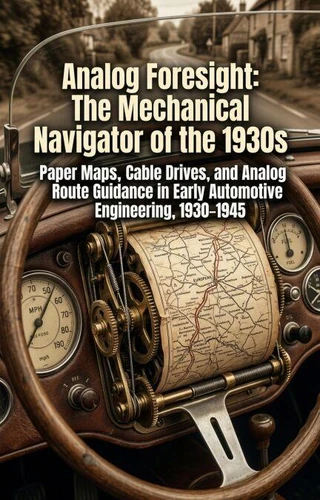
Analog Foresight: The Mechanical Navigator of the 1930s. Paper Maps, Cable Drives, and Analog Route Guidance in Early Automotive Engineering, 1930–1945
Par :Formats :
Disponible dans votre compte client Decitre ou Furet du Nord dès validation de votre commande. Le format ePub est :
- Compatible avec une lecture sur My Vivlio (smartphone, tablette, ordinateur)
- Compatible avec une lecture sur liseuses Vivlio
- Pour les liseuses autres que Vivlio, vous devez utiliser le logiciel Adobe Digital Edition. Non compatible avec la lecture sur les liseuses Kindle, Remarkable et Sony
 , qui est-ce ?
Notre partenaire de plateforme de lecture numérique où vous retrouverez l'ensemble de vos ebooks gratuitement
Pour en savoir plus sur nos ebooks, consultez notre aide en ligne ici
C'est si simple ! Lisez votre ebook avec l'app Vivlio sur votre tablette, mobile ou ordinateur :

- Nombre de pages141
- FormatePub
- ISBN978-3-565-34974-6
- EAN9783565349746
- Date de parution23/03/2026
- Protection num.pas de protection
- Taille789 Ko
- Infos supplémentairesepub
- ÉditeurEmphaloz Publishing House
Résumé
Long before satellites orbited the earth to beam real-time directions to glowing digital screens, early motorists navigated terrifyingly blank roads using nothing but folded paper and pure intuition. Getting lost was a constant, dangerous reality of the early automotive era.
The inherent danger of trying to read a static map while operating a heavy machine at high speeds drove engineers to seek a radical solution.
The result was the Iter Avto, a forgotten masterpiece of analog engineering. This dashboard-mounted device used a complex system of mechanical cables linked directly to the speedometer to physically scroll a paper map in perfect synchronization with the car's physical speed. This captivating historical engineering book uncovers the brilliant but flawed logic of the world's first mechanical GPS.
It details the complex manufacturing challenges, the spatial reasoning of early drivers, and why this ingenious analog solution ultimately failed to anticipate the unpredictable nature of open-road detours. Journey back to the fascinating mechanical roots of modern navigation. Explore this bizarre technological dead-end to appreciate the immense physical ingenuity that paved the way for the digital maps we rely on today.
The result was the Iter Avto, a forgotten masterpiece of analog engineering. This dashboard-mounted device used a complex system of mechanical cables linked directly to the speedometer to physically scroll a paper map in perfect synchronization with the car's physical speed. This captivating historical engineering book uncovers the brilliant but flawed logic of the world's first mechanical GPS.
It details the complex manufacturing challenges, the spatial reasoning of early drivers, and why this ingenious analog solution ultimately failed to anticipate the unpredictable nature of open-road detours. Journey back to the fascinating mechanical roots of modern navigation. Explore this bizarre technological dead-end to appreciate the immense physical ingenuity that paved the way for the digital maps we rely on today.