SOLDES
Jusqu'à -70% sur une sélection d'articles*
An Outline of the Relations between England and Scotland (500-1707)
Par :Formats :
Disponible dans votre compte client Decitre ou Furet du Nord dès validation de votre commande. Le format ePub est :
- Compatible avec une lecture sur My Vivlio (smartphone, tablette, ordinateur)
- Compatible avec une lecture sur liseuses Vivlio
- Pour les liseuses autres que Vivlio, vous devez utiliser le logiciel Adobe Digital Edition. Non compatible avec la lecture sur les liseuses Kindle, Remarkable et Sony
 , qui est-ce ?
Notre partenaire de plateforme de lecture numérique où vous retrouverez l'ensemble de vos ebooks gratuitement
Pour en savoir plus sur nos ebooks, consultez notre aide en ligne ici
C'est si simple ! Lisez votre ebook avec l'app Vivlio sur votre tablette, mobile ou ordinateur :

- Nombre de pages166
- FormatePub
- ISBN859-65--4724074-7
- EAN8596547240747
- Date de parution04/09/2022
- Protection num.Digital Watermarking
- Taille444 Ko
- Infos supplémentairesepub
- ÉditeurDIGICAT
Résumé
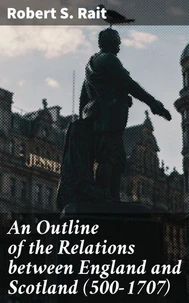
In "An Outline of the Relations between England and Scotland (500-1707), " Robert S. Rait presents a meticulously crafted exploration of the intricate political, social, and cultural dynamics that shaped the relationship between England and Scotland over twelve centuries. Rait employs a scholarly yet accessible literary style, rich with historical detail and critical analysis, drawing upon a wide array of primary and secondary sources.
This work situates itself within the broader context of British history, examining pivotal events such as the Wars of Independence, the Union of the Crowns, and the eventual Act of Union in 1707 that transformed the political landscape of both nations. Robert S. Rait was a distinguished historian with a keen interest in Scottish and English history, a focus undoubtedly influenced by his academic background and scholarly endeavors.
His extensive study of medieval and modern history allowed him to unravel the complex narratives that define the socio-political tapestry of the British Isles. Rait's expertise lends credibility to his work, providing readers with a thorough understanding of how historical forces shaped national identities. For readers invested in understanding the historical interplay between England and Scotland, Rait's work is indispensable.
It not only enlightens with its depth and clarity but also invites critical reflection on how these relations continue to influence contemporary issues. This book is a must-read for historians, students, and anyone intrigued by the evolution of national relationships in a historically rich region.
This work situates itself within the broader context of British history, examining pivotal events such as the Wars of Independence, the Union of the Crowns, and the eventual Act of Union in 1707 that transformed the political landscape of both nations. Robert S. Rait was a distinguished historian with a keen interest in Scottish and English history, a focus undoubtedly influenced by his academic background and scholarly endeavors.
His extensive study of medieval and modern history allowed him to unravel the complex narratives that define the socio-political tapestry of the British Isles. Rait's expertise lends credibility to his work, providing readers with a thorough understanding of how historical forces shaped national identities. For readers invested in understanding the historical interplay between England and Scotland, Rait's work is indispensable.
It not only enlightens with its depth and clarity but also invites critical reflection on how these relations continue to influence contemporary issues. This book is a must-read for historians, students, and anyone intrigued by the evolution of national relationships in a historically rich region.