SOLDES
Jusqu'à -70% sur une sélection d'articles*
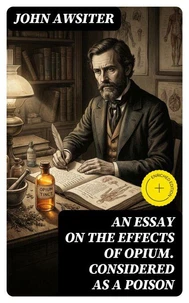
An Essay on the Effects of Opium. Considered as a Poison. Unveiling the Poisonous Effects of Opium in 19th Century Literature
Par :Formats :
Disponible dans votre compte client Decitre ou Furet du Nord dès validation de votre commande. Le format ePub est :
- Compatible avec une lecture sur My Vivlio (smartphone, tablette, ordinateur)
- Compatible avec une lecture sur liseuses Vivlio
- Pour les liseuses autres que Vivlio, vous devez utiliser le logiciel Adobe Digital Edition. Non compatible avec la lecture sur les liseuses Kindle, Remarkable et Sony
 , qui est-ce ?
Notre partenaire de plateforme de lecture numérique où vous retrouverez l'ensemble de vos ebooks gratuitement
Pour en savoir plus sur nos ebooks, consultez notre aide en ligne ici
C'est si simple ! Lisez votre ebook avec l'app Vivlio sur votre tablette, mobile ou ordinateur :

- Nombre de pages161
- FormatePub
- ISBN406-4-06-621610-8
- EAN4064066216108
- Date de parution09/12/2019
- Protection num.Digital Watermarking
- Taille584 Ko
- Infos supplémentairesepub
- ÉditeurGOOD PRESS
Résumé
In "An Essay on the Effects of Opium: Considered as a Poison, " John Awsiter explores the multifaceted impact of opium on both individual health and societal well-being. With meticulous attention to scientific detail, Awsiter delves into the physiological, psychological, and social ramifications of opium use, employing a blend of empirical observation and analytical discourse that echoes the Enlightenment ideals of reason and inquiry.
His prose is rigorous yet accessible, capturing the era's burgeoning interest in toxicology and the ethical implications of drug use, reflecting both the era's trepidation and fascination with substances that alter human consciousness. John Awsiter, a physician and contemporary of prominent Enlightenment thinkers, draws from his medical background and personal observations of opium's effects on both patients and society.
His writing comes at a time when opium's use was escalating, prompting both medical and philosophical debates about its place in society. Awsiter's insights reflect a deep concern for public health and ethical medicine, positioning him as a critical voice in the discourse surrounding drug regulation and moral responsibility. This essay is highly recommended for readers interested in the intersection of medicine, ethics, and society.
Awsiter'Äôs analysis not only informs but also challenges readers to engage critically with the implications of drug use, making it a vital contribution to the understanding of addiction and its legacy in modern society.
His prose is rigorous yet accessible, capturing the era's burgeoning interest in toxicology and the ethical implications of drug use, reflecting both the era's trepidation and fascination with substances that alter human consciousness. John Awsiter, a physician and contemporary of prominent Enlightenment thinkers, draws from his medical background and personal observations of opium's effects on both patients and society.
His writing comes at a time when opium's use was escalating, prompting both medical and philosophical debates about its place in society. Awsiter's insights reflect a deep concern for public health and ethical medicine, positioning him as a critical voice in the discourse surrounding drug regulation and moral responsibility. This essay is highly recommended for readers interested in the intersection of medicine, ethics, and society.
Awsiter'Äôs analysis not only informs but also challenges readers to engage critically with the implications of drug use, making it a vital contribution to the understanding of addiction and its legacy in modern society.