
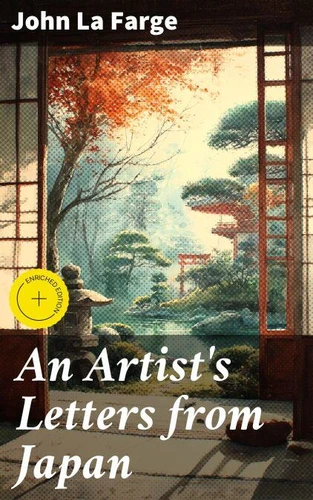
An Artist's Letters from Japan. Enriched edition. A Journey into Japanese Culture and Art: Letters of Exploration and Inspiration
Par : ,Formats :
Disponible dans votre compte client Decitre ou Furet du Nord dès validation de votre commande. Le format ePub est :
- Compatible avec une lecture sur My Vivlio (smartphone, tablette, ordinateur)
- Compatible avec une lecture sur liseuses Vivlio
- Pour les liseuses autres que Vivlio, vous devez utiliser le logiciel Adobe Digital Edition. Non compatible avec la lecture sur les liseuses Kindle, Remarkable et Sony
 , qui est-ce ?
Notre partenaire de plateforme de lecture numérique où vous retrouverez l'ensemble de vos ebooks gratuitement
Pour en savoir plus sur nos ebooks, consultez notre aide en ligne ici
C'est si simple ! Lisez votre ebook avec l'app Vivlio sur votre tablette, mobile ou ordinateur :

- Nombre de pages204
- FormatePub
- ISBN4057664592880
- EAN4057664592880
- Date de parution18/05/2021
- Protection num.Digital Watermarking
- Taille4 Mo
- Infos supplémentairesepub
- ÉditeurGOOD PRESS
Résumé
In "An Artist's Letters from Japan, " John La Farge offers a profound exploration of Japanese culture through the lens of an American artist deeply captivated by its aesthetic and philosophical richness. Written as a series of personal letters during his travels in the late 19th century, the work combines vivid descriptions with thoughtful reflections on art, religion, and nature. La Farge employs a lyrical prose style that communicates his emotional responses and intricate observations, grounding his experiences within the broader context of Western artistic exchanges with Japan during the Meiji Restoration'-a period marked by immense transformation and cross-cultural influences.
John La Farge (1835-1910), an accomplished painter and stained glass artist, was one of the first Americans to fully appreciate and articulate the nuances of Japanese art. His eclectic background, which included training in both academic and non-Western artistic traditions, profoundly shaped his understanding of beauty and creativity. La Farge's genuine curiosity and respect for Japanese culture resonate throughout his letters, revealing his quest for artistic inspiration and personal growth through this cross-cultural journey.
"An Artist's Letters from Japan" is a must-read for those interested in cross-cultural studies, art history, and the interplay between East and West. La Farge's insights and eloquent prose provide a timeless perspective that continues to inspire and educate readers about the enduring significance of art in bridging diverse cultures. This collection not only serves as an artistic memoir but also as a vital document in understanding the historical context of Western perceptions of Japan. In this enriched edition, we have carefully created added value for your reading experience: - A succinct Introduction situates the work's timeless appeal and themes. - The Synopsis outlines the central plot, highlighting key developments without spoiling critical twists. - A detailed Historical Context immerses you in the era's events and influences that shaped the writing. - A thorough Analysis dissects symbols, motifs, and character arcs to unearth underlying meanings. - Reflection questions prompt you to engage personally with the work's messages, connecting them to modern life. - Hand-picked Memorable Quotes shine a spotlight on moments of literary brilliance. - Interactive footnotes clarify unusual references, historical allusions, and archaic phrases for an effortless, more informed read.
John La Farge (1835-1910), an accomplished painter and stained glass artist, was one of the first Americans to fully appreciate and articulate the nuances of Japanese art. His eclectic background, which included training in both academic and non-Western artistic traditions, profoundly shaped his understanding of beauty and creativity. La Farge's genuine curiosity and respect for Japanese culture resonate throughout his letters, revealing his quest for artistic inspiration and personal growth through this cross-cultural journey.
"An Artist's Letters from Japan" is a must-read for those interested in cross-cultural studies, art history, and the interplay between East and West. La Farge's insights and eloquent prose provide a timeless perspective that continues to inspire and educate readers about the enduring significance of art in bridging diverse cultures. This collection not only serves as an artistic memoir but also as a vital document in understanding the historical context of Western perceptions of Japan. In this enriched edition, we have carefully created added value for your reading experience: - A succinct Introduction situates the work's timeless appeal and themes. - The Synopsis outlines the central plot, highlighting key developments without spoiling critical twists. - A detailed Historical Context immerses you in the era's events and influences that shaped the writing. - A thorough Analysis dissects symbols, motifs, and character arcs to unearth underlying meanings. - Reflection questions prompt you to engage personally with the work's messages, connecting them to modern life. - Hand-picked Memorable Quotes shine a spotlight on moments of literary brilliance. - Interactive footnotes clarify unusual references, historical allusions, and archaic phrases for an effortless, more informed read.