
Nouveauté
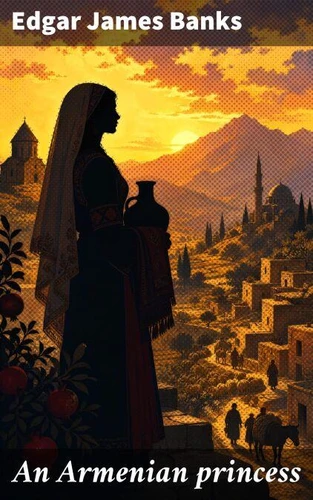
An Armenian princess. Historical Novel - A tale of Anatolian life
Par :Formats :
Disponible dans votre compte client Decitre ou Furet du Nord dès validation de votre commande. Le format ePub est :
- Compatible avec une lecture sur My Vivlio (smartphone, tablette, ordinateur)
- Compatible avec une lecture sur liseuses Vivlio
- Pour les liseuses autres que Vivlio, vous devez utiliser le logiciel Adobe Digital Edition. Non compatible avec la lecture sur les liseuses Kindle, Remarkable et Sony
 , qui est-ce ?
Notre partenaire de plateforme de lecture numérique où vous retrouverez l'ensemble de vos ebooks gratuitement
Pour en savoir plus sur nos ebooks, consultez notre aide en ligne ici
C'est si simple ! Lisez votre ebook avec l'app Vivlio sur votre tablette, mobile ou ordinateur :

- Nombre de pages100
- FormatePub
- ISBN859-65--4790489-2
- EAN8596547904892
- Date de parution29/06/2026
- Protection num.Digital Watermarking
- Taille607 Ko
- Infos supplémentairesepub
- ÉditeurGOOD PRESS
Résumé
An Armenian Princess: A Tale of Anatolian Peasant Life is a late nineteenth-century prose narrative that blends romance, travel writing, and ethnographic observation. Set in Anatolia, the book depicts village customs, social hierarchies, and the precarious coexistence of ethnic and religious communities under Ottoman rule. Its style is characteristic of its era: descriptive, dramatic, and shaped by a Western observer's fascination with the rural East.
Yet beyond its sentimental plot, the work offers valuable insight into peasant life, gender expectations, and the cultural textures of provincial Anatolia. Edgar James Banks, an American archaeologist, diplomat, and writer, is best known for his work in the ancient Near East and for his wide-ranging knowledge of Ottoman lands. His professional travels through Mesopotamia and Anatolia gave him direct acquaintance with local landscapes and peoples, and this experience informs the book's concrete settings and social detail.
Banks wrote at a moment when Western readers were eager for narratives that joined adventure with documentary realism. This book will reward readers interested in Armenian representation, Ottoman provincial society, and the intersection of fiction with travel-based cultural description. It is especially recommended for those who wish to read it both as a literary work and as a historical artifact of cross-cultural observation.
Yet beyond its sentimental plot, the work offers valuable insight into peasant life, gender expectations, and the cultural textures of provincial Anatolia. Edgar James Banks, an American archaeologist, diplomat, and writer, is best known for his work in the ancient Near East and for his wide-ranging knowledge of Ottoman lands. His professional travels through Mesopotamia and Anatolia gave him direct acquaintance with local landscapes and peoples, and this experience informs the book's concrete settings and social detail.
Banks wrote at a moment when Western readers were eager for narratives that joined adventure with documentary realism. This book will reward readers interested in Armenian representation, Ottoman provincial society, and the intersection of fiction with travel-based cultural description. It is especially recommended for those who wish to read it both as a literary work and as a historical artifact of cross-cultural observation.