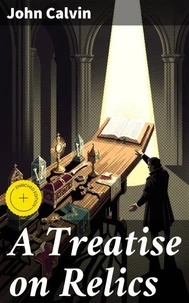
In "An Admonition showing, the Advantages which Christendom might derive from an Inventory of Relics, " John Calvin offers a critical examination of the practice of relic veneration within the Christian tradition. Written in the context of the Reformation, Calvin's text employs a clear and persuasive literary style, characterized by logical argumentation and theological rigor. He advocates for a more discerning approach to relics, emphasizing the need for reform in the Church and the potential spiritual benefits of a well-cataloged and authenticated inventory of these sacred objects.
This work not only critiques existing practices but also reflects the broader historical movement toward scriptural authority and away from superstition in 16th-century Europe. John Calvin (1509-1564), a principal figure of the Protestant Reformation, sought to address what he perceived as the excesses and corruptions of the Catholic Church. His reformist zeal led him to question various aspects of religious practice, including the veneration of relics, which he viewed as potentially idolatrous.
Calvin's theological education and his position in Geneva provided him with both the platform and the urgency to advocate for these transformative ideas. This book is recommended for readers interested in Reformation theology, ecclesiastical history, and the interplay between faith and practice. Calvin'Äôs insights remain relevant today, prompting a re-evaluation of religious traditions and their alignment with biblical principles.
In "An Admonition showing, the Advantages which Christendom might derive from an Inventory of Relics, " John Calvin offers a critical examination of the practice of relic veneration within the Christian tradition. Written in the context of the Reformation, Calvin's text employs a clear and persuasive literary style, characterized by logical argumentation and theological rigor. He advocates for a more discerning approach to relics, emphasizing the need for reform in the Church and the potential spiritual benefits of a well-cataloged and authenticated inventory of these sacred objects.
This work not only critiques existing practices but also reflects the broader historical movement toward scriptural authority and away from superstition in 16th-century Europe. John Calvin (1509-1564), a principal figure of the Protestant Reformation, sought to address what he perceived as the excesses and corruptions of the Catholic Church. His reformist zeal led him to question various aspects of religious practice, including the veneration of relics, which he viewed as potentially idolatrous.
Calvin's theological education and his position in Geneva provided him with both the platform and the urgency to advocate for these transformative ideas. This book is recommended for readers interested in Reformation theology, ecclesiastical history, and the interplay between faith and practice. Calvin'Äôs insights remain relevant today, prompting a re-evaluation of religious traditions and their alignment with biblical principles.
 , qui est-ce ?