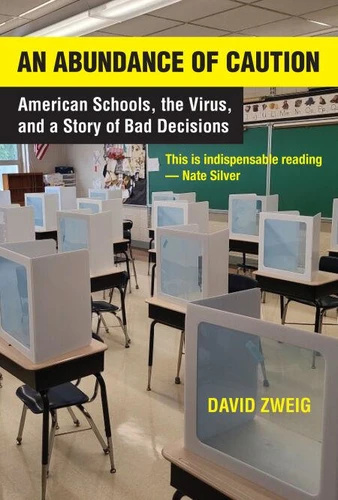
An Abundance of Caution. American Schools, the Virus, and a Story of Bad Decisions
Par :Formats :
Disponible dans votre compte client Decitre ou Furet du Nord dès validation de votre commande. Le format ePub protégé est :
- Compatible avec une lecture sur My Vivlio (smartphone, tablette, ordinateur)
- Compatible avec une lecture sur liseuses Vivlio
- Pour les liseuses autres que Vivlio, vous devez utiliser le logiciel Adobe Digital Edition. Non compatible avec la lecture sur les liseuses Kindle, Remarkable et Sony
- Non compatible avec un achat hors France métropolitaine
 , qui est-ce ?
Notre partenaire de plateforme de lecture numérique où vous retrouverez l'ensemble de vos ebooks gratuitement
Pour en savoir plus sur nos ebooks, consultez notre aide en ligne ici
C'est si simple ! Lisez votre ebook avec l'app Vivlio sur votre tablette, mobile ou ordinateur :

- Nombre de pages464
- FormatePub
- ISBN978-0-262-38003-4
- EAN9780262380034
- Date de parution22/04/2025
- Protection num.Adobe DRM
- Taille1 Mo
- Infos supplémentairesepub
- ÉditeurThe MIT Press
Résumé
A searing indictment of the American public health, media, and political establishments' decision-making process behind pandemic school closures. An Abundance of Caution is a devastating account of the decision-making process behind one of the worst American policy failures in a century-the extended closures of public schools during the pandemic. In fascinating and meticulously reported detail, David Zweig shows how some of the most trusted members of society-from Pulitzer Prize-winning journalists to eminent health officials-repeatedly made fundamental errors in their assessment and presentation of evidence.
As a result, for the first time in modern American history, millions of healthy children did not set foot in a classroom for more than a year. Since the spring of 2020, many students in Europe had been learning in person. Even peers at home-in private schools, and public schools in mostly "red" states and districts-were in class full time from fall 2020 onward. Whatever inequities that existed among American children before the pandemic, the selective school closures exacerbated them, disproportionately affecting the underprivileged.
Deep mental, physical, and academic harms-among them, depression, anxiety, abuse, obesity, plummeting test scores, and rising drop-out rates-were endured for no discernible benefit. As Europe had shown very early, after they had sent kids back to class, there was never any evidence that long-term school closures, nor a host of interventions imposed on students when they were in classrooms, would reduce overall cases or deaths in any meaningful way.
The story of American schools during the pandemic serves as a prism through which to approach fundamental questions about why and how individuals, bureaucracies, governments, and societies act as they do in times of crisis and uncertainty. Ultimately, this book is not about COVID; it's about a country ill-equipped to act sensibly under duress.
As a result, for the first time in modern American history, millions of healthy children did not set foot in a classroom for more than a year. Since the spring of 2020, many students in Europe had been learning in person. Even peers at home-in private schools, and public schools in mostly "red" states and districts-were in class full time from fall 2020 onward. Whatever inequities that existed among American children before the pandemic, the selective school closures exacerbated them, disproportionately affecting the underprivileged.
Deep mental, physical, and academic harms-among them, depression, anxiety, abuse, obesity, plummeting test scores, and rising drop-out rates-were endured for no discernible benefit. As Europe had shown very early, after they had sent kids back to class, there was never any evidence that long-term school closures, nor a host of interventions imposed on students when they were in classrooms, would reduce overall cases or deaths in any meaningful way.
The story of American schools during the pandemic serves as a prism through which to approach fundamental questions about why and how individuals, bureaucracies, governments, and societies act as they do in times of crisis and uncertainty. Ultimately, this book is not about COVID; it's about a country ill-equipped to act sensibly under duress.