SOLDES
Jusqu'à -70% sur une sélection d'articles*

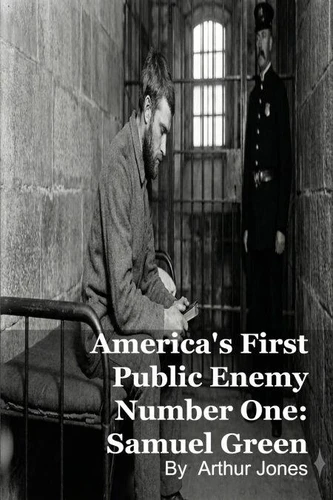
America's First Public Enemy Number One: Samuel Green
Par :Formats :
Disponible dans votre compte client Decitre ou Furet du Nord dès validation de votre commande. Le format ePub est :
- Compatible avec une lecture sur My Vivlio (smartphone, tablette, ordinateur)
- Compatible avec une lecture sur liseuses Vivlio
- Pour les liseuses autres que Vivlio, vous devez utiliser le logiciel Adobe Digital Edition. Non compatible avec la lecture sur les liseuses Kindle, Remarkable et Sony
 , qui est-ce ?
Notre partenaire de plateforme de lecture numérique où vous retrouverez l'ensemble de vos ebooks gratuitement
Pour en savoir plus sur nos ebooks, consultez notre aide en ligne ici
C'est si simple ! Lisez votre ebook avec l'app Vivlio sur votre tablette, mobile ou ordinateur :

- FormatePub
- ISBN8232318796
- EAN9798232318796
- Date de parution04/12/2025
- Protection num.pas de protection
- Infos supplémentairesepub
- ÉditeurDraft2Digital
Résumé
America's First Public Enemy Number One: Samuel GreenSamuel Green (1796-1822), a serial killer whose brutal career spanned New England, is historically notable for being one of the first individuals in 1820s America designated as "public enemy number one." Born in Meredith, New Hampshire, Green's violent pathology stemmed from a combination of severe childhood abuse-which his parents wrongly believed was an exorcism-and apparent psychopathic traits.
This trauma created a remorseless killer responsible for dozens of murders across multiple states. After escaping Canadian custody where he faced a death sentence for robbery, Green's spree continued until his final, horrific crime: the November 1821 murder of fellow inmate Billy Williams at Massachusetts State Prison. Green viciously attacked Williams with an iron rod, inflicting a fractured skull and numerous other broken bones; Williams succumbed to his injuries seven days later.
Green's subsequent conviction and execution on April 25, 1822, created a remarkable historical anomaly: he was the first and only white person ever executed in Massachusetts for murdering a Black victim. This solitary statistic dramatically underscores the extreme racial bias in antebellum American capital punishment, given that 533 Black people were executed for crimes against whites for every single white person executed for killing a Black victim.
Nonetheless, Green's case demonstrated that, however rare, equal justice was theoretically attainable.
This trauma created a remorseless killer responsible for dozens of murders across multiple states. After escaping Canadian custody where he faced a death sentence for robbery, Green's spree continued until his final, horrific crime: the November 1821 murder of fellow inmate Billy Williams at Massachusetts State Prison. Green viciously attacked Williams with an iron rod, inflicting a fractured skull and numerous other broken bones; Williams succumbed to his injuries seven days later.
Green's subsequent conviction and execution on April 25, 1822, created a remarkable historical anomaly: he was the first and only white person ever executed in Massachusetts for murdering a Black victim. This solitary statistic dramatically underscores the extreme racial bias in antebellum American capital punishment, given that 533 Black people were executed for crimes against whites for every single white person executed for killing a Black victim.
Nonetheless, Green's case demonstrated that, however rare, equal justice was theoretically attainable.
A propos de Arthur Johnson

The Italian Wars
E-book
1,99 €
0,99 €