SOLDES
Jusqu'à -70% sur une sélection d'articles*

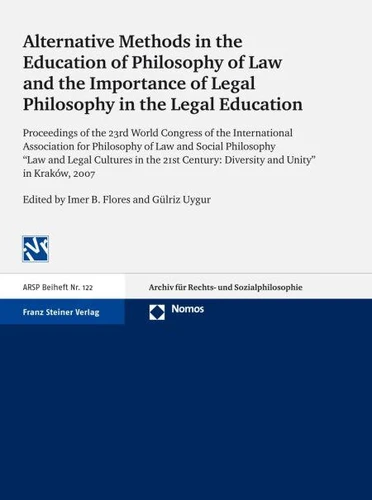
Alternative Methods in the Education of Philosophy of Law and the Importance of Legal Philosophy in the Legal Education. Proceedings of the 23rd World Congress of the International Association for Philosophy of Law and Social Philosophy "Law and Legal Cultures in the 21st Century: Diversity and Unity" in Kraków 2007
Par : ,Formats :
Disponible dans votre compte client Decitre ou Furet du Nord dès validation de votre commande. Le format PDF est :
- Compatible avec une lecture sur My Vivlio (smartphone, tablette, ordinateur)
- Compatible avec une lecture sur liseuses Vivlio
- Pour les liseuses autres que Vivlio, vous devez utiliser le logiciel Adobe Digital Edition. Non compatible avec la lecture sur les liseuses Kindle, Remarkable et Sony
 , qui est-ce ?
Notre partenaire de plateforme de lecture numérique où vous retrouverez l'ensemble de vos ebooks gratuitement
Pour en savoir plus sur nos ebooks, consultez notre aide en ligne ici
C'est si simple ! Lisez votre ebook avec l'app Vivlio sur votre tablette, mobile ou ordinateur :

- Nombre de pages114
- FormatPDF
- ISBN978-3-515-09951-6
- EAN9783515099516
- Date de parution13/08/2012
- Protection num.Digital Watermarking
- Taille1 Mo
- Infos supplémentairespdf
- ÉditeurFranz Steiner
Résumé
This book's aims are to determine the importance of legal philosophy in legal education and in addition to develop alternative methods for teaching law in general and the philosophy of law in particular.
In this context, the individual essays in this volume discuss the alternatives and tendencies in the quest for an adequate model of teaching and learning jurisprudence. Common to all of them is a commitment to the necessary integration of theoretical and practical knowledge, of traditional case and lecture methods with non-traditional models such as cinema, drama, and literature, and of the dominant legal perspective with alternative approaches utilizing information technologies such as computers and the internet.
Effective teaching and learning must favor critical and strategic thinking, dialectical and dialogical inquiry or research, problem-solving, role-playing, and skill-developing over mere rote memorization of existing rules and standard answers.
Effective teaching and learning must favor critical and strategic thinking, dialectical and dialogical inquiry or research, problem-solving, role-playing, and skill-developing over mere rote memorization of existing rules and standard answers.