SOLDES
Jusqu'à -70% sur une sélection d'articles*

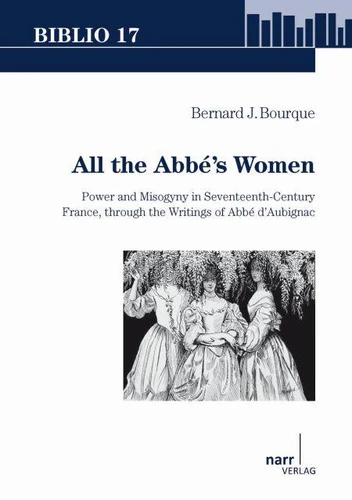
All the Abbé's Women. Power and Misogyny in Seventeenth-Century France, through the Writings of Abbé d'Aubignac
Par :Formats :
Disponible dans votre compte client Decitre ou Furet du Nord dès validation de votre commande. Le format PDF est :
- Compatible avec une lecture sur My Vivlio (smartphone, tablette, ordinateur)
- Compatible avec une lecture sur liseuses Vivlio
- Pour les liseuses autres que Vivlio, vous devez utiliser le logiciel Adobe Digital Edition. Non compatible avec la lecture sur les liseuses Kindle, Remarkable et Sony
 , qui est-ce ?
Notre partenaire de plateforme de lecture numérique où vous retrouverez l'ensemble de vos ebooks gratuitement
Pour en savoir plus sur nos ebooks, consultez notre aide en ligne ici
C'est si simple ! Lisez votre ebook avec l'app Vivlio sur votre tablette, mobile ou ordinateur :

- Nombre de pages224
- FormatPDF
- ISBN978-3-8233-7974-4
- EAN9783823379744
- Date de parution17/06/2015
- Protection num.Digital Watermarking
- Taille1 Mo
- Infos supplémentairespdf
- ÉditeurGunter Narr Verlag
Résumé
One of the most striking aspects of abbé d'Aubignac's fictional output is that the principal focus of his work is women. D'Aubignac's attempt to articulate his philosophy about the female sex is very much an intricate balancing act. While he is clearly interested in women, placing them on a pedestal in many of his writings, the abbé imposes limitations on their perceived innate qualities and often embraces the notion of the female as a societal scapegoat.
All the Abbé's Women explores how these ideas were influenced by the socio-political conditions of d'Aubignac's time, resulting in a complex interrelationship between the notions of power and misogyny in the author's fictional and critical works. The study also aims to contribute to the scholarship on d'Aubignac, painting a portrait of the abbé that has not been the focus of previous books. The work will appeal to students of French literature, gender studies and the cultural history of Early Modern France.
All the Abbé's Women explores how these ideas were influenced by the socio-political conditions of d'Aubignac's time, resulting in a complex interrelationship between the notions of power and misogyny in the author's fictional and critical works. The study also aims to contribute to the scholarship on d'Aubignac, painting a portrait of the abbé that has not been the focus of previous books. The work will appeal to students of French literature, gender studies and the cultural history of Early Modern France.