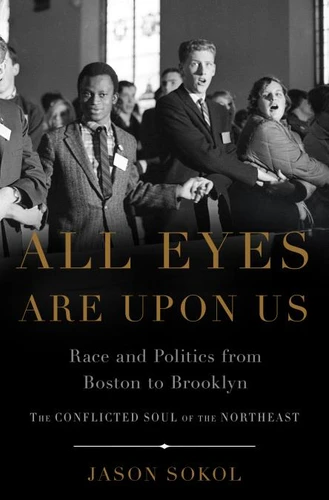
All Eyes are Upon Us. Race and Politics from Boston to Brooklyn
Par :Formats :
Disponible dans votre compte client Decitre ou Furet du Nord dès validation de votre commande. Le format ePub protégé est :
- Compatible avec une lecture sur My Vivlio (smartphone, tablette, ordinateur)
- Compatible avec une lecture sur liseuses Vivlio
- Pour les liseuses autres que Vivlio, vous devez utiliser le logiciel Adobe Digital Edition. Non compatible avec la lecture sur les liseuses Kindle, Remarkable et Sony
- Non compatible avec un achat hors France métropolitaine
 , qui est-ce ?
Notre partenaire de plateforme de lecture numérique où vous retrouverez l'ensemble de vos ebooks gratuitement
Pour en savoir plus sur nos ebooks, consultez notre aide en ligne ici
C'est si simple ! Lisez votre ebook avec l'app Vivlio sur votre tablette, mobile ou ordinateur :

- Nombre de pages416
- FormatePub
- ISBN978-0-465-05671-2
- EAN9780465056712
- Date de parution01/12/2014
- Protection num.Adobe DRM
- Infos supplémentairesepub
- ÉditeurBasic Books
Résumé
The Northeastern United States -- home to abolitionism and a refuge for blacks fleeing the Jim Crow South -- has had a long and celebrated history of racial equality and political liberalism. After World War II, the region appeared poised to continue this legacy, electing black politicians and rallying behind black athletes and cultural leaders. However, as historian Jason Sokol reveals in All Eyes Are Upon Us, these achievements obscured the harsh reality of a region riven by segregation and deep-seated racism.
White fans from across Brooklyn -- Irish, Jewish, and Italian -- came out to support Jackie Robinson when he broke baseball's color barrier with the Dodgers in 1947, even as the city's blacks were shunted into segregated neighborhoods. The African-American politician Ed Brooke won a senate seat in Massachusetts in 1966, when the state was 97% white, yet his political career was undone by the resistance to busing in Boston.
Across the Northeast over the last half-century, blacks have encountered housing and employment discrimination as well as racial violence. But the gap between the northern ideal and the region's segregated reality left small but meaningful room for racial progress. Forced to reckon with the disparity between their racial practices and their racial preaching, blacks and whites forged interracial coalitions and demanded that the region live up to its promise of equal opportunity.
A revelatory account of the tumultuous modern history of race and politics in the Northeast, All Eyes Are Upon Us presents the Northeast as a microcosm of America as a whole: outwardly democratic, inwardly conflicted, but always striving to live up to its highest ideals.
White fans from across Brooklyn -- Irish, Jewish, and Italian -- came out to support Jackie Robinson when he broke baseball's color barrier with the Dodgers in 1947, even as the city's blacks were shunted into segregated neighborhoods. The African-American politician Ed Brooke won a senate seat in Massachusetts in 1966, when the state was 97% white, yet his political career was undone by the resistance to busing in Boston.
Across the Northeast over the last half-century, blacks have encountered housing and employment discrimination as well as racial violence. But the gap between the northern ideal and the region's segregated reality left small but meaningful room for racial progress. Forced to reckon with the disparity between their racial practices and their racial preaching, blacks and whites forged interracial coalitions and demanded that the region live up to its promise of equal opportunity.
A revelatory account of the tumultuous modern history of race and politics in the Northeast, All Eyes Are Upon Us presents the Northeast as a microcosm of America as a whole: outwardly democratic, inwardly conflicted, but always striving to live up to its highest ideals.